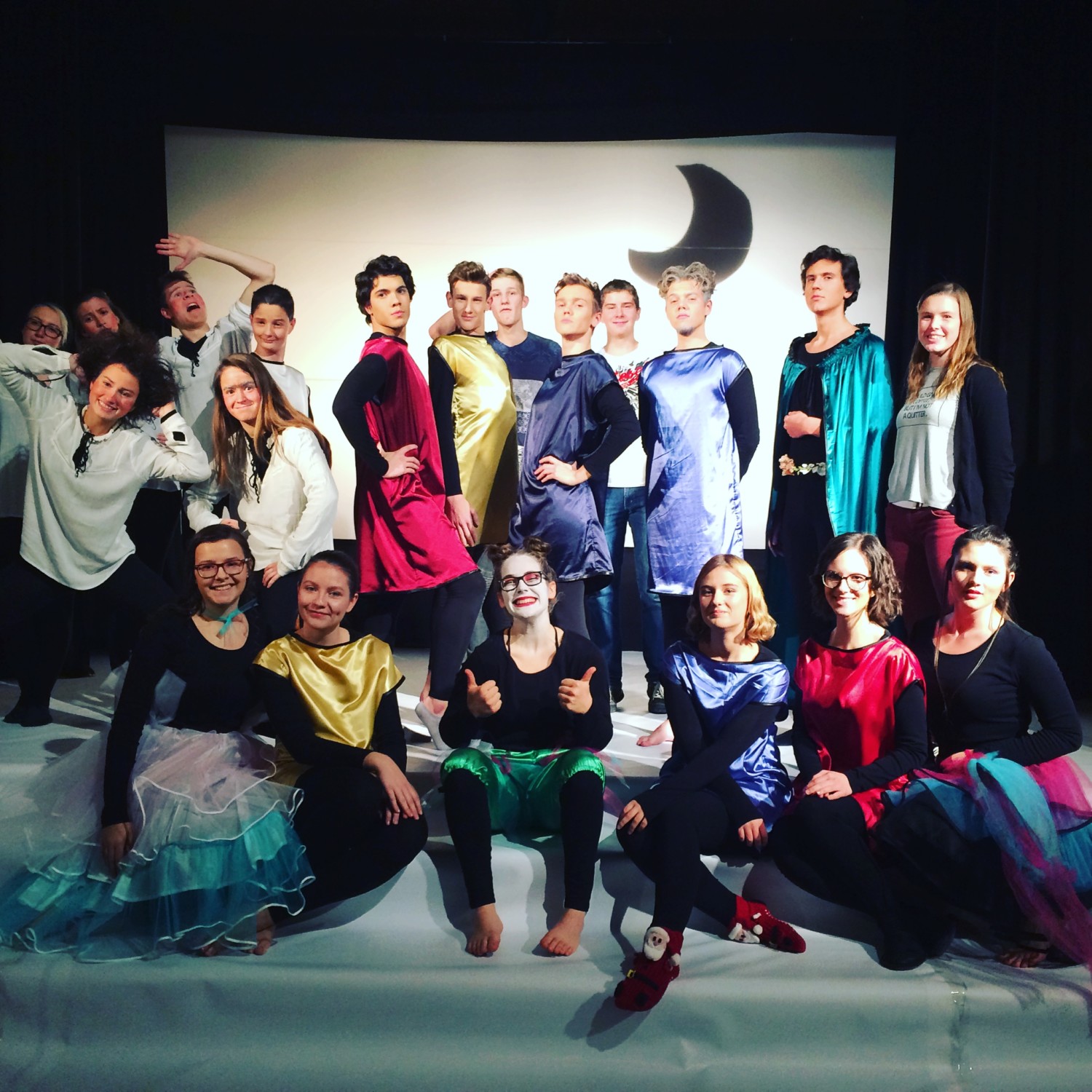
English Drama Club of The Diocesan Classical Gymnasium is staging this year A Midsummer Night’s Dream by William Shakespeare. In this way, St. Stanislav’s Institution commemorates the 400th anniversary of the lasting legacy of the world’s greatest playwright in English language. Twenty-eight student-members of English Drama Club acted in four reprises, which took place in November and December 2016. Among them, there were eighteen actors, six scene artists, two lighting and sound designers, a photographer and a designer of hair and makeup. Thus, the play was entirely in student’s hands, who worked under the mentorship of Alenka Battelino and Mojca Lavrič, who have been with the English Drama Club since 2012. After Oscar Wilde’s Ideal Husband, this is already the second play to in English language at the DCG.
Read more
These are some reflections on the play by Anamarija Mihovec (Year 3), who acted in the play: William Shakespeare. Is there anybody who does not know his name? Not only did he write 37 acts and 154 sonnets, but there are also an enormous amount of new words and phrases he left behind. His works have had a huge effect on writers and literature worldwide. What an honour to act in one of his comedies!
How did it all start?
It all started quite simply, with an invitation over the school loudspeaker. But, let us take it step by step.
The beginnings, the idea. The first meeting was interesting: new faces, new opinions, new friends. Just a little bit about the author himself. A Midsummer Night`s Dream (our aim). First homework (already!): read the play in Slovene and think about the cast. First conversations and discussions, then reading (in quite difficult Shakespeare`s) English. There was (and still is) a lot of text. More than three quarters of it also incomprehensible at first. We did have a Slovene translation that helped us out. If as an actor, you do not know what you talk about, you cannot tell it right, can you? Casting definition. Rehearsals. Learning the text by heart (some have a lot of it, others a bit less).
Rehearsals are underway. I stopped counting them at twenty. (Just kidding). Actually, I did not have to count them. It was a pleasure to be there. Talks in Slovene, then in English and some laughter. The first part of rehearsals consisted of sitting and reading with a book in our hands, the second part were movements over the stage. Every Thursday one hour and a half spent in the company of people who all wanted to put Shakespeare`s work on stage. Slow, but sure progress.
Doubts? Intense rehearsals at the beginning of holidays. First clear “visions” of how the scene should look like. A few problems. Illness, not (yet) knowing all the words, bad mood (not a lot, of course!). We still tried to pull it all together and do our best. And that`s how it progressed – a bit better every time.
Talks about the costumes and hairstyles. A lot of ideas. Brain storming. Scribbling notes. The main idea of simplicity, black leggies and shirt, in different colours, depending on the character. “Let the story be obvious!” Hairstyles. Variety of them among actors. A day when we tried on all of them. (Also the day when I scared myself by looking in the mirror. I really adore my hair now.). Whole play. Getting to know the scene (those shades – a beautiful idea, if you ask me.). We all hoped it would go well.
Open rehearsal. First group photo. Back to play. A huge surprise – a nice one – for all of us. A thrilled crowd (I`m joking, it was not really a crowd), but those ten who did watch the play were thrilled. That provided us with fresh energy. One last practice before the premiere.
The first night. Just a little bit of stage fright. Improvising. Every time we liked it a little bit better. First critics. We were pleasantly surprised by the good ones. Different aspects, different opinions.
Play reviews by some actors and visitors
“When I watched A Midsummer Night`s Dream for the first time I had no expectations. I was pleasantly surprised. The first thing I noticed was the scene, which was quite minimalistic. The floor and background were white and the only thing in the background were the shades of tree leaves and mushrooms. Nevertheless, it was clear what the scene presented and the audience was made to concentrate on the play. As a photographer, I especially liked the lights. They made the scene rather three-dimensional. Thanks to Slovene up-titles, the audience can understand the play despite original Shakespeare’s English. I kindly recommend watching the play to everybody – theatre lovers and beginners; the play catches your attention from the very beginning until you realise it`s over!” Andraž Novak; photographer
“I have participated in the play three times already, but I have never really watched it. I have always been working backstage and tried my hardest for the scene to look great. As I heard, the play is dynamic and interesting. I can hear that the actors are really trying their best.” Ajda Kok, scene artists
“I starred “Nick Bottom” in the play. I was, at least others said so, the star of the night. I couldn’t really say that I stood out. (…) Anyway, I am happy about the play. It was my first big theatre experience. “You know, theatre is not the only stage-managed thing in life. It`s one of the many that tells it publicly and with pride. Life is a play. The Earth is our stage and we are actors. Every day we put on a different mask, trying to convince our friends and peers that we are cool enough, teachers and co-workers that we are smart, employers that we are very capable and a parish priest that we are loyal to God and devoted believers. We even get so accustomed to our masks that we cannot take them off and the face we look at in the evening is not us anymore … think about it… Do you really need to be a theatre actor to learn how to act? I absolutely disagree. I challenge you to prove me wrong…” Luka Benedičič, “Nick Bottom”, actor
“A Midsummer Night`s Dream in the interpretation of The English Drama Club of DCG was a unique experience. Excellently-prepared actors upgraded the original and always actual Shakespeare’s play. The interpretation, which is with this playwright always important) was first-class and represented a quality “theatrical” experience. Personal engagement of everybody involved should be emphasised. Especially the actors were well prepared and got accustomed to the roles taken, which resulted in an outstanding performance. Thus, acting was a key element in excellent characterisations and differentiation of characters. All actors formed on stage a convincing, effective and quality lot, though the scenery was occasionally too dry for me. Definitely worth visiting.” Rok Jan Špiletič, theatergoer
Fin
Maybe the most important opinion of the main directors, A. Battelino and M. Lavrič. They thought it was good. They deserve the biggest “thank you” of course! One can do everything, if you really want to. Happy audience. The feeling of satisfaction, after all the input it was worthwhile. (Cake for everyone!). Hugs. We are one little family. It passed way too fast. That`s how our early winter day’s dream is ending. Say that Shakespeare is boring or too hard, if you dare! /Anamarija Mihovec, year 3/
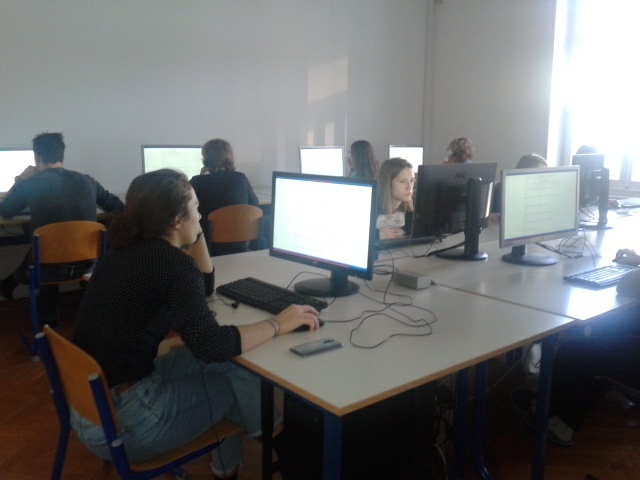
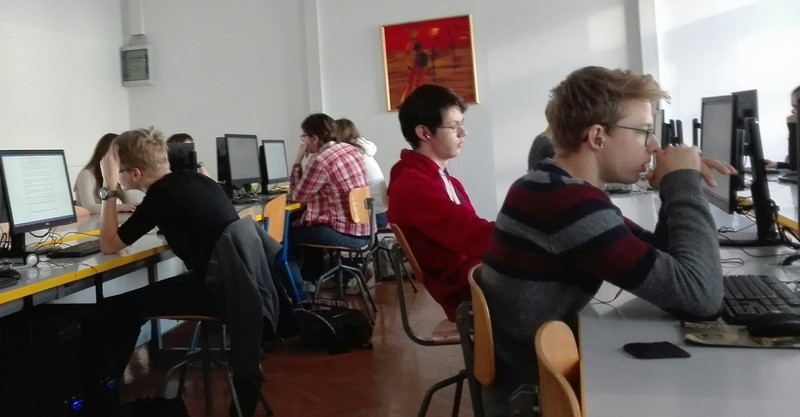
On November 30, twenty-nine students from the Diocesan Classical Gymnasium participated in the European online English Language Competition Best in English for the first time. They were more than eager to grasp the opportunity to compare their English language skills with those of 15 107 European peers coming from 683 schools and 28 countries. The test fulfilled the needs of students of all years and abilities.
Today we are delighted to announce some really impressive results of our students. The most outstanding achievement of Tinkara UršičFratina from 3C class, who held the 42th place, was just the best among other impressive results obtained by Nika Knez, Nina Katarina Štular, Mark Loborec, Matic Kotar and Matevž Herič. We offer our sincere congratulations to all our contestants! /Petra Kromar/
Twenty-nine students from the DCG joined almost 11.000 other students from about 500 schools from all over Europe to compete for the first time at the international competition The Best in English. The event took place on 30th November 2016, it ran smoothly and suited the needs of students of all years and abilities. At nine o’clock sharp participants’ faces got absorbed by the tasks presented on the screens and all one could hear was keyboard typing and mouse clicking. Laughter provoked by up-to-date videos was occasionally heard and generally, a happy atmosphere was created in the classroom.
The teachers of English as well as students believe that this is a lovely way to compare their language skills with those of their European peers. What is more, the test is free of charge and especially students were satisfied with results that appear right away at the end of the contest. In short The Best in English competition is a great European experience. Presently the results are being calculated and we cannot wait to have them announced! /Lily Schweiger Kotar/
THE BEST IN ENGLISH CONTEST is a truly European online English language competition, open to all high schools within the EU. The test is designed for high school students aged between 15 and 19. So far 10.985 students from almost 500 schools from 19 countries have been involved. The purpose of the test is to motivate students towards greater language comprehension having the chance to compare the results with other students across the world.
The next competition will take place on 30th November, 2016 and The Diocesan Classical Gymnasium is to participate for the first time. First thirty students will be able to join in the competition! The organisers of the Contest are the Institute for Competencies Development, a non-profit organisation, and two student agencies. The Test has been put together by Akcent International House Prague language school. More on: http://bestinenglish.org/ You are kindly invited to join in the competition! The contact person at the DCG is Petra Kromar. /Lily Schweiger Kotar/
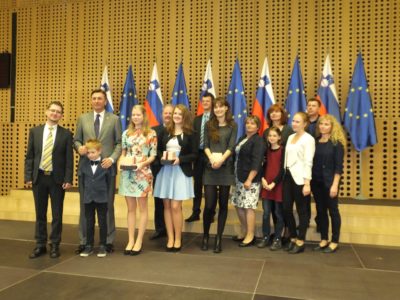
President of the Republic of Slovenia Borut Pahor and the Minister of Education, Science and Sport dr. Maja Makovec Brenčič received on Saturday, 8th October 2016 the cream of the crop of this year’s high-school Slovene graduates, who attained all possible amount of points at Maturity examination. There are nineteen such graduates in Slovenia, among who also three from the Diocesan Classical Gymnasium: Živa Dolenšek, Eva Gričar and Eva Kržišnik.
The President pointed out on this occasion that it is the young who enter the world with an opportunity to change it. “ Your knowledge offers self-confidence and prevents you from others taking important decisions instead of you. /…/ You shall have this power and I wish you to use it for good and noble goals. It is up to you to improve the society we live in.” We congratulate Živa, and both Evas on their outstanding achievement and wish them all success in their future endeavours. /Lily Schweiger Kotar/
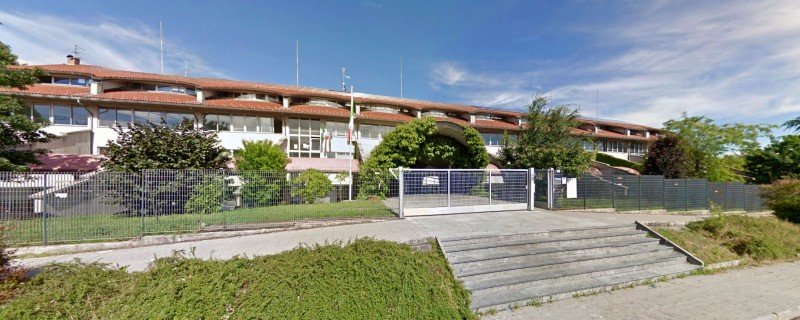
From 26th – 30th September 2016 the traditional international sport event took place in Busto Arsizio, Varese. Apart from the Slovene and Italian teams, there were also high school students from The Check Republic, Germany and the Netherlands. The event was the twelfth in a row, this time dedicated to headball with 21 matches taking place. The Diocesan Classical Gymnasium took the second place, after the match result being a draw (14:14), and the hosting school Liceo Scientifico Statale Arturo Tosi winning the point of a difference after a penalty shoot-out. Beside competitions, teachers took part in the International conference on new teaching methods and proper nutrition for athletes. /Tea Obrč, PE Teacher, exchange coordinator/
To be merciful means to walk the path with fellow men trying to find out what they actually need, which is usually not what they ask for. To become a neighbour is a matter of heart.
team building for abt. 180 educators
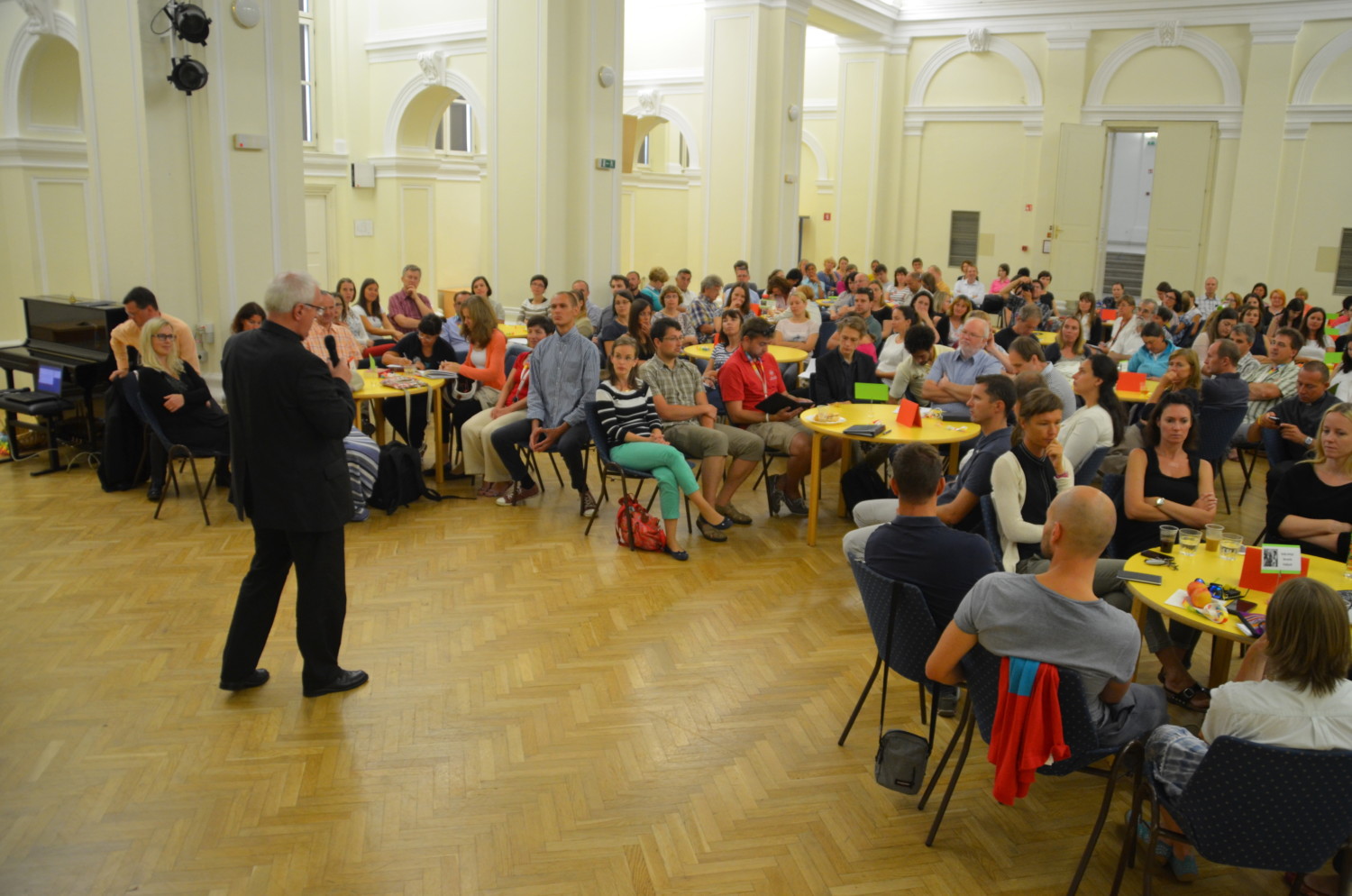
With the above words and the question from the parable of the Good Samaritan teachers from St. Stanislav’s Institution tried to pursue the path to children, pupils and students who are entrusted to our care. It was the archbishop of Ljubljana Msgr. Stanislav Zore, who was the keynote speaker on the annual education day, which took place on 23rd August 2016. The director of St. Stanislav’s Institution dr. Roman Globokar emphasised the purpose of this day, which is to continue last year theme on the protection of the environment, pay respect to the holy year of mercy, deal with refugee crisis, consider Pope’s messages of encouragement and embody the mission statement of St. Stanislav’s Institution. This is to foster the integral personal growth of each individual in the community, guided by faith, hope and love and in dialogue with the world, with the goal of living fully for the betterment of the world. Both speakers encouraged teachers and educators to live the example of Samaritan: he listened to his heart ignoring the rules; he was not afraid of actually meeting the man who fell into the hands of robbers; and finally he did not leaveude the wounded man out, but stood by him.
“Who is my neighbour?” is the key question teachers and students in St. Stanislav’s Institution will try to answer in a variety of ways throughout the academic year 2016/17. The answer will especially come true in our everyday life, to which we are looking forward, as it is the most precious gift of God. /Lily Schweiger Kotar/
The Diocesan Classical Gymnasium student Jurij Strehar, year 4, has qualified for the selective competition for the International Physics Olympiad. National elimination rounds involve a multi-stage selection and training process. Jurij took the second place at the national competition in physics, thus joining 10 high school competitors from all over the country, five of who are to form the Slovene national team 2016.
The Olympiad is an annual event for secondary school students whose interest in physics extends beyond the classroom and in which about 90 countries from five continents take part. Switzerland and the Principality of Liechtenstein have been selected to host the IPhO in 2016. The 47th International Physics Olympiad will take place from 10th – 18th July 2016 in Zurich, Switzerland. /Lily Schweiger Kotar/
St. Stanislav’s Institution hosted the entire teaching staff from Graz with their director dr. Justinus Greifeneder on 12th March 2016. Both gymnasiums have had a long and fruitful history of exchanges in different fields. A day before their visit the (Re)Mixed Choir of DCG returned from Graz where they took part in a joint choral concert ; in April already the fourth language exchange will take place and we are looking forward to hosting Austrian students in the diocasean Classicla Gymnasium in Ljubljana.
Director of St. Stanislav’s Institution dr. Roman Globokar presented in brief the history of the institution, especially the newly opened primary school and kindergarten. The tour of the instutiton which followed, offered an insight view of our work and endeavours. After lunch the staff continued their excursion in Slovenia. Irena Bolta, teacher of German at The Diocesan Classical Gymnasium, was responsible for the visit.
Overjoyed pupils and teachers about Prevc’s results
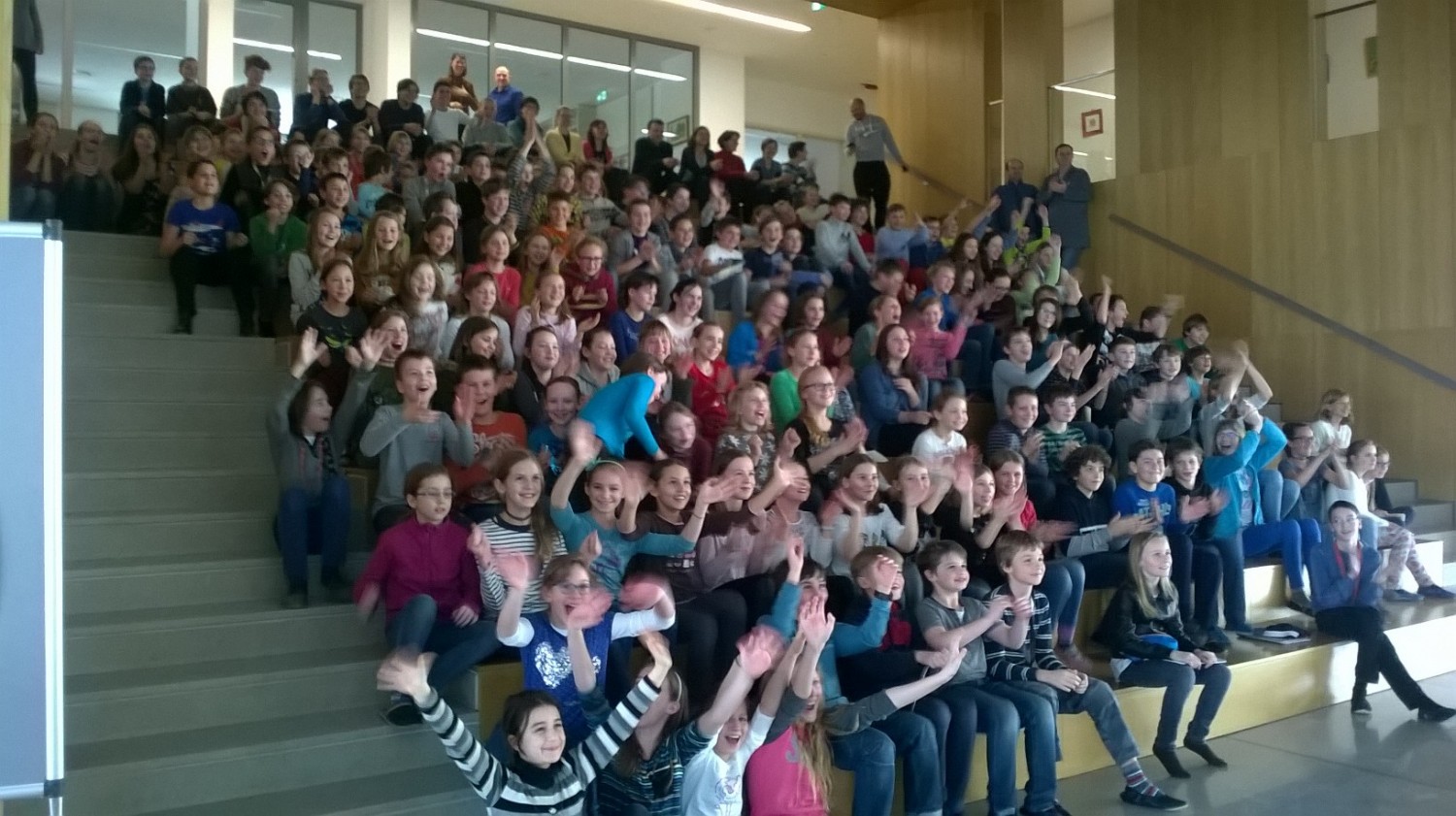
On Thursday 17th March 2016 pupils from Alojzij Šuštar Primary School offered strong and loud support in school for the Slovene Champion Peter Prevc and other Slovene eagels in Planica at the 2016 Fis World Cup Ski Jumping Final in Planica (Slovenia). Thus pupils contributed in their own way to fantastic atmosphere in Planica. Peter Prevc celebrated a record 14th win of the season, Robert Kranjec was excellent third, achieving with 241.5m the distance of the day. The oldest competing jumper, the Japanese Noriaki Kasai, jumped today for the 500th time in a world cup competition. Today it is the fifth consecutive Slovene victory in Planica and a great day to boost the feeling of national pride. /Lily Schweiger Kotar /
 THE BEST IN ENGLISH CONTEST is a truly European online English language competition, open to all high schools within the EU. The test is designed for high school students aged between 15 and 19. So far 10.985 students from almost 500 schools from 19 countries have been involved. The purpose of the test is to motivate students towards greater language comprehension having the chance to compare the results with other students across the world.