On 8th December 2015 the inauguration of the Jubilee of Mercy took place in Rome when Pope Francis opened the Holy Door in St. Peter’s Basilica. In St. Stanislav’s Institution, there are many opportunities to pay more attention to God’s mercy toward all of us and to be thoughtful of everyone in everyday life.
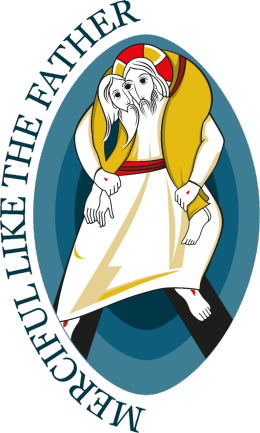
Mercy does not mean haughtiness, indulgence and lenience, but the ability to accept other people’s needs, embrace their fate in order to help each other at a moment, when a step forward cannot be taken. Mercifulness means being ready to enter the chaos of another person. The logo provides a fitting summary of what the Jubilee Year is all about. The logo, which is to be used worldwide throughout the jubilee year, is the work of Jesuit Father Marko I. Rupnik and presents the Son having taken upon his shoulders the lost soul.
Fr. Rupnik made two mosaics in St. Stanislav’s Institution: the major one in St. Stanislav Chapel and another one in the Chapel of Wisdom of God, situated in the Janez F. Gnidovec Residence Hall.
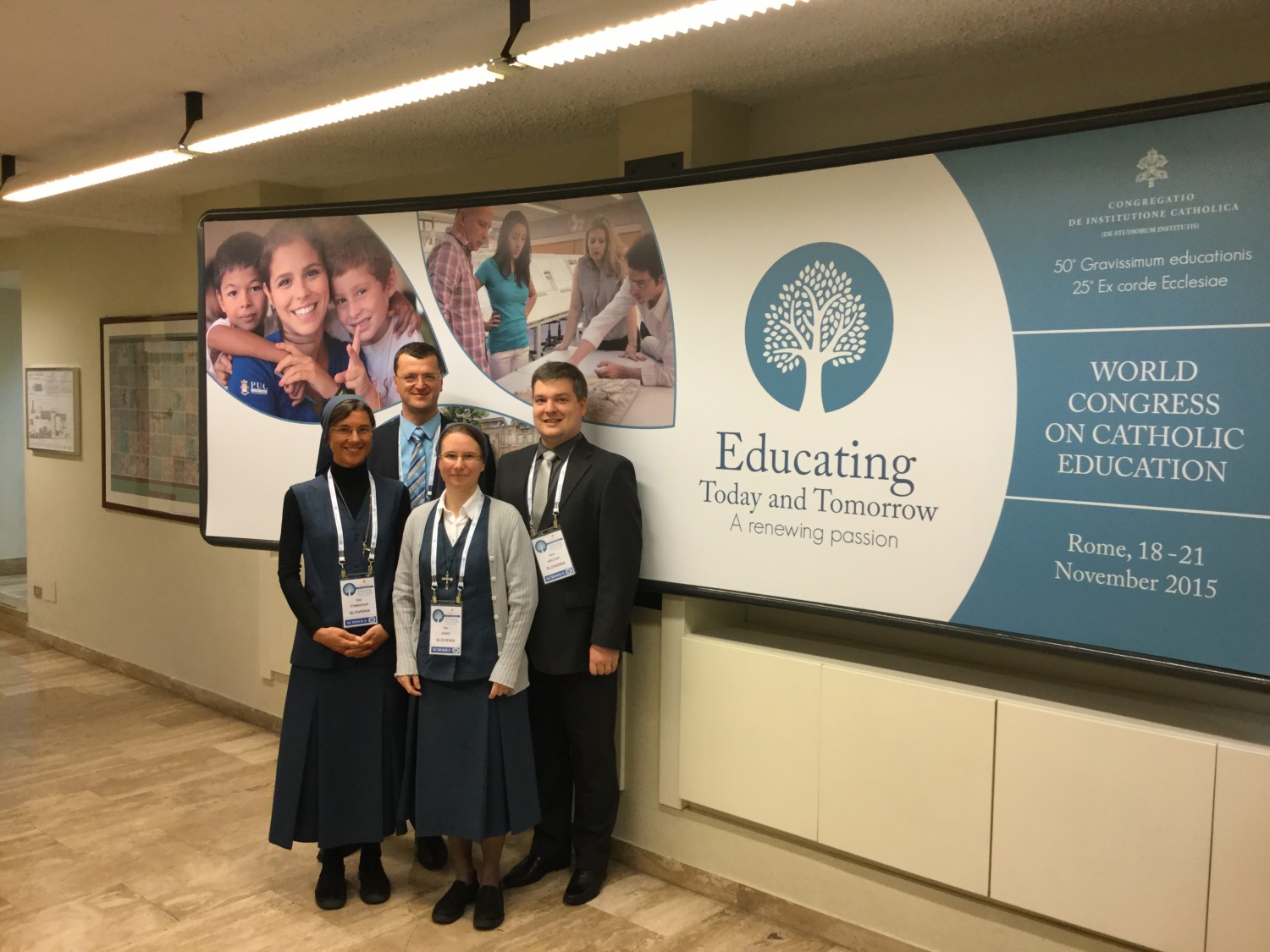
The Congregation for Catholic Education has organized for the first time a world congress entitled Educating Today and Tomorrow – A Renewed Passion with 2000 delegates responsible for Catholic education. It took place in Rome from 18th-21st November 2015. The conference was to commemorate the 50th anniversary of the Second Vatican Council’s Declaration Gravissimum Educationis and the 25th anniversary of the Apostolic Constitution Ex Corde Ecclesiae.
The purpose of the conference was to direct the Catholic education into the new era through cooperation among different educational institutions. Catholic schools and universities, who act in the name of the Universal Church, are there for others. They propose the faith and offer pastoral accompaniment, while resolutely defending human dignity and diffusing knowledge. This is done in dialogue with others, allowing for mutual enrichment as we contemplate that light of hope and faith lies at the root of all education. One of the key challenges of the congress was to answer the issue of the new forms of poverty, which in particular reminds the Church of its primary mission. A similar point was made also by Pope Francis who addressed the participants in the Plenary Session saying: “The greatest failure of a teacher is to educate within boundaries – those of a selective culture, secure culture or within the boundaries of a rich social sector.”
Dr. Roman Globokar, the director of St. Stanislav’s Institution, who participated in the congress with three other Slovenes, accentuated that the meeting has been meaningful also for Slovenia, where Catholic education should be more often presented to wider public, which would enrich the educational and cultural section of Slovene society. A better understanding of Christian pedagogy, which opens up the individual in his freedom, thus enabling him to live his life to the fullest and contribute to the common good, would contribute to the same cause. In this perspective the continual formation of teachers is of utmost importance. According to Dr. Globokar they should be bearers of gospel’s authentic spirit and not only conveyers of knowledge.
Each year the entire school community of St. Stanislav’s Institution celebrates St. Stanislaus’ Day to mark the feast of the Institution’s patron. This year the holy mass and the solemn celebration took place on 12th November 2015, focusing in particular on music and the striking figure of St. Stanislaus Kostka, which was inspiringly described during the sermon by the archbishop of Ljubljana Msgr. Stanislav Zore. The entire event is to celebrate the many talents and successes of the pupils of Alojzij Šuštar Primary School and the students of Diocesan Classical Gymnasium. It is also to express gratitude to the keen supporters of the Institution and Heavenly Father for all the abundant blessings. The enthusiastic audience and performers proved that the Institution’s mission is being admirably fulfilled.
St. Stanislaus – Young Man Born for Greater Things
The Archbishop of Ljubljana Msgr. Stanislav Zore, who celebrated the mass with many other school and parish priests, spoke mainly of St. Stanislaus’ short life and tried to encourage the young to dare to follow God’s calling, because they, too, are born for greater things than just the transitory ones. Man who answers God’s calling is virtually capable of more, he could have ever thought. “When man decides to fulfil God’s wish, God makes his approach.” More Than 300 Young People Born for Greater Things
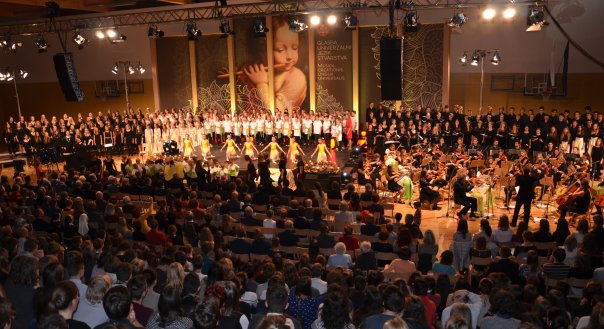
At the solemn celebration more than 300 pupils and students intertwined music and poetry. The event’s guiding thread was Music, universal language of creation through which it was neatly demonstrated that music is in fact inborn in every human, resides in him and leads him towards transcendence. Five choirs of the Diocesan Classical Gymnasium and Alojzij Šuštar Primary School, string orchestra of Music School performed along with ballet and hip hop dancers. The children of The Good Shepherd Kindergarten rounded beautifully the big picture of the Institution’s educational endeavours.
The entire event concluded with special thanks through the lyrics of John Rutter’s song Look at the World that was sung by all the singers: »Give us thankful hearts, that we may see all the gift we share and every blessing.«
Each year the entire school community celebrates St. Stanislav’s Day to mark the feast of the Institution’s patron. We have the pleasure of inviting you to this year’s celebration which will be marked with holy mass and a solemn celebration on Thursday 12th November 2015. Holy mass will be celebrated at 3 p.m. in the parish church of St. Vitus in Ljubljana Šentvid by the Archbishop of Ljubljana Msgr. Stanislav Zore. The solemn celebration will take place at 5 p. m. in the new sports hall of the Alojzij Šuštar Primary School. Mr. Matjaž Barbo, musicologist, will hold the official speech. The performance will be given by the students of all schools in St. Stanislav’s Institution.
We look forward to meeting you.
Roman Globokar, Ph. D.
Director of St. Stanislav’s Institution
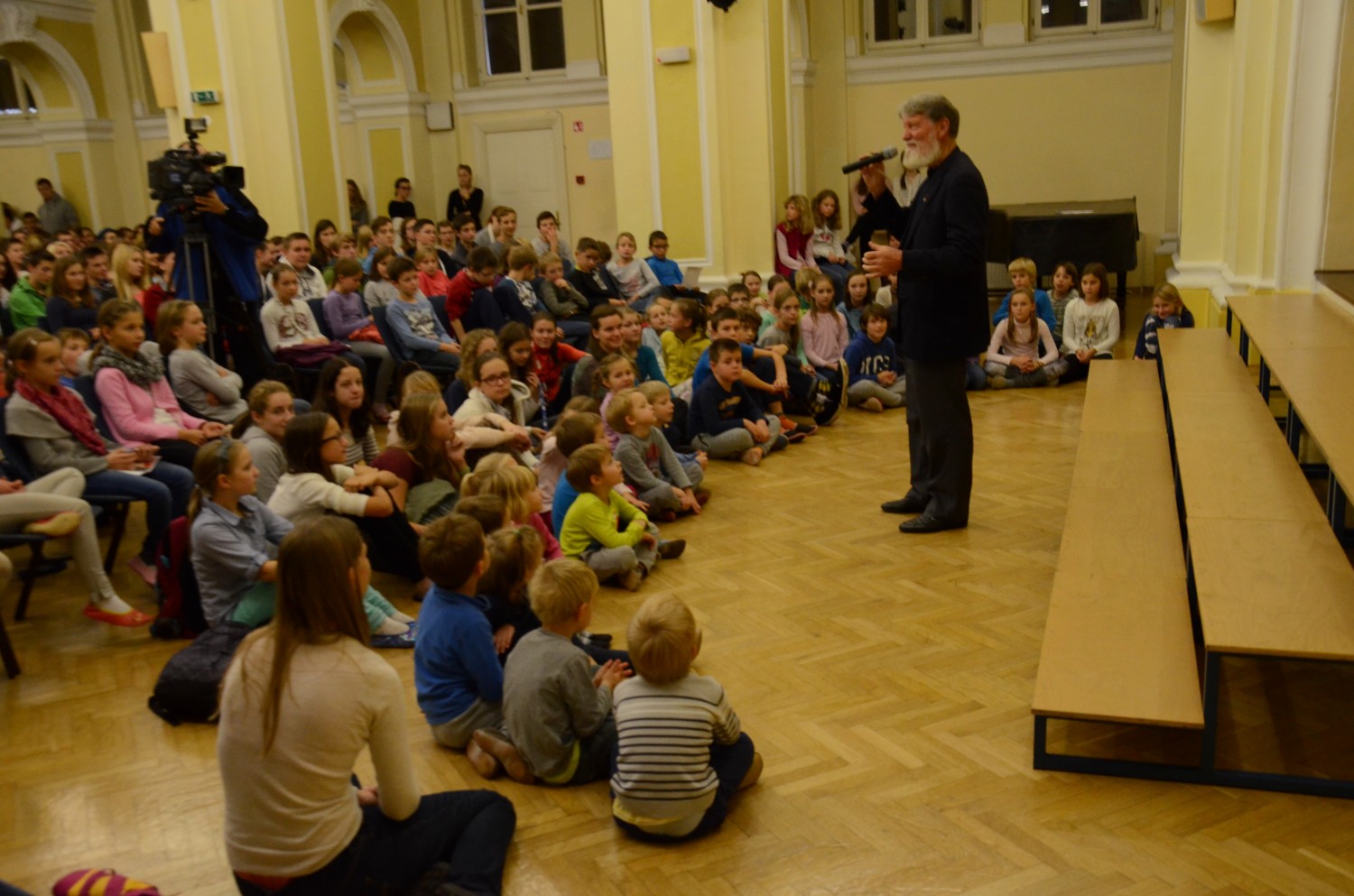
Missionary village, which took place in St. Stanislav’s Institution from 16th-17th October, 2015 is a yearly event organized by the Church, which provides a variety of activities and learning opportunities to meet the Slovene missionaries and their work in different parts of the world. This year’s guest of honour was fr. Pero Opeka, a Slovene priest and missionary, who has been working in Madagascar for four decades. He gave two speeches to students of DCG and Alojzij Šuštar Primary School on his rich experience and lifelong endeavours with Malagasy people and their well-being.
In school year 2015/16 two exchanges took place with the above mentioned Flemish school, with which St. Stanislav’s Institution has been in cooperation for long years.
In April 2015 a group of 21 DCG students accompanied by two teachers spent in Belgium a lovely and educative week, in September2015 the Belgians came over to Slovenia. The common thread of the exchange revolved around the centenary of the beginning of WWI and getting to know Slovenia and its highlights. Afternoons were dedicated to the sightseeing of Ljubljana and its surroundings, as well as Bled, where we rowed to the island in the middle of Lake Bled. One of the most memorable parts of the exchange was a visit to the Slovene Littoral, where students got acquainted with the Isonzo Front and its role in WWI, visited the famous Lipica stud farm and eventually enjoyed a late-summer swim in the Adriatic Sea.
The mentors of the above mentioned exchange in Slovenia were the following teachers: Andrej Bartol, Mirjam Erce Vratuša and Špela Zupan.
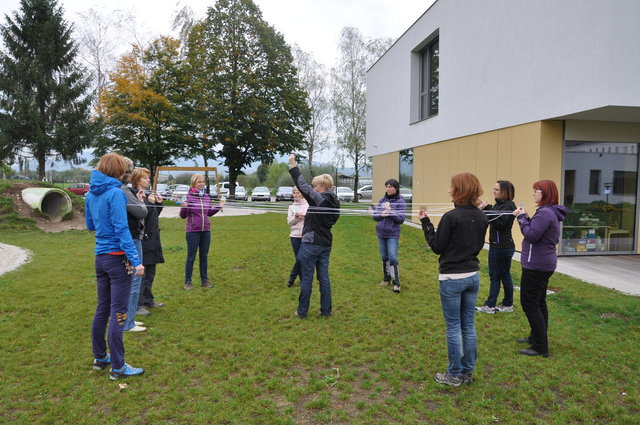
On Saturday, 10th October 2015, Alojzij Šuštar Primary School organized an international conference on outdoor learning, as a part of the international project. Around 50 teachers and pedagogues from all over Slovenia attended the conference.
In the first plenary session Ela Rupert and Dragica Radojevič from the Alojzij Šuštar Primary School presented the outdoor learning methods and principles used at their school. The second plenary speaker was Jan-Kare Fjeld, a Norwegian teacher from Borge Skole, who presented the outdoor learning activities and techniques he has been practising for 10 years and enthused the participants.
The second part of the conference was practical. Some of the Alojzij Šuštar Primary School teachers carried out different practical workshops. Other organizations that also presented educational workshops were Slovenian Catholic Girl Guides and Boy Scouts Association, Triglav National Park, Slovenia Forest Service, Planet Zemlja and Čarobni gozd.
Regarding the participants’ feedback, the conference has achieved its main goal, which was to motivate the participants to practice outdoor learning and to provide useful outdoor learning activities teachers could use in their everyday work with students.
Ela Rupert, project manager
Congratulations go to the entire Slovene team of eight high-school students who participated in the 2015 International Genetically Engineered Machine competition. Naturally, we are especially proud of Nina! Students’ hard work and achievements are truly worthy of celebration!
Nina Jerala was chosen in the Slovene team based on her previous research work performed in academic year 2014/15, which was carried out in the National Institute of Chemistry Slovenia. The research was aimed at the reprogrammed E. coli for sustainable production of bio butanol, a highly effective biofuel, from butyric acid, which is a side product of anaerobic fermentation of waste. The research work took place throughout the academic year 2014/15.
Slovene students took part in the competition and iGEM HS conference from 24th-28th September, 2015 in Boston, USA. There they presented their poster, had a presentation and set up their web site. The Slovene team was nominated for the best Wiki, best presentation and the best integrated human practices. Moreover, they presented one of the five nominated projects for Grand Prize among 35 high schools worldwide. The Slovenes were awarded gold medal for the best high school project.
This was the first Slovene high school team to take part in the iGEM HS competition.
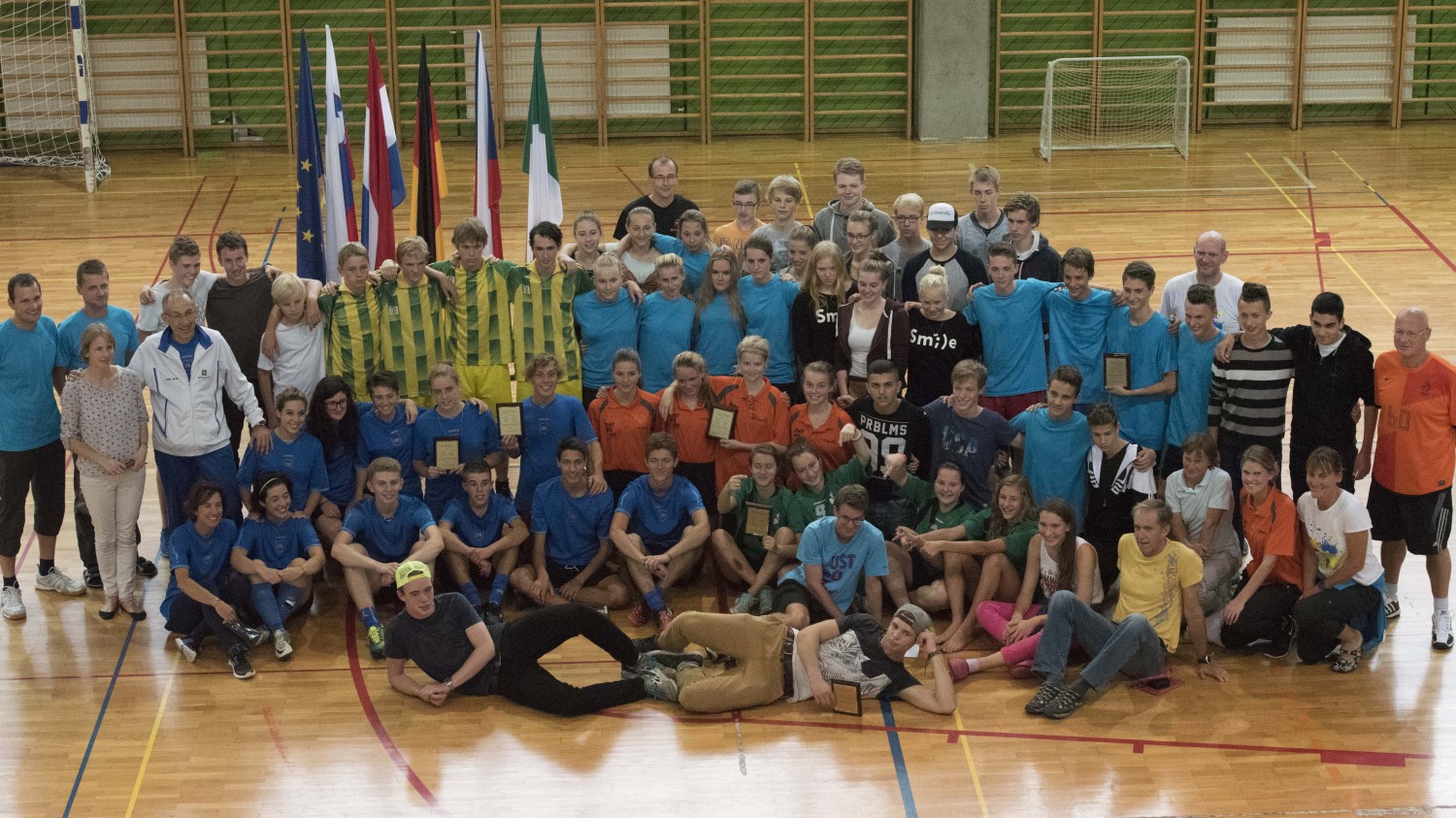
The 11th international football event was organized from 21st- 25thSeptember, 2015 at the DCG. It hosted young athletes from Italy (Liceo Scientifico Arturo Tosi, Busto Arsizio, Varese), Germany (Gymnasium Johanneum, Ostbevern), the Netherlands (St. Gregorious College, Utrecht), the Check Republic (Biskupska Gymnazium B Balbina Hradec, Kralove) and Slovenia (Moste Gymnasium) for the third time. Six boys and six girls teams took part in three-sided football. The Italians and students from Moste Gymnasium proved to be real masters of the game. This was not only sports competition time, but also days of culture and fun. Students went to see the Alpine area of Slovenia, Upper Carniola, where they visited the biggest and most modern Nordic skiing complex Planica Nordic Centre and some natural sights.
Next year the tournament will be held in Busto Arsizio in Italy.
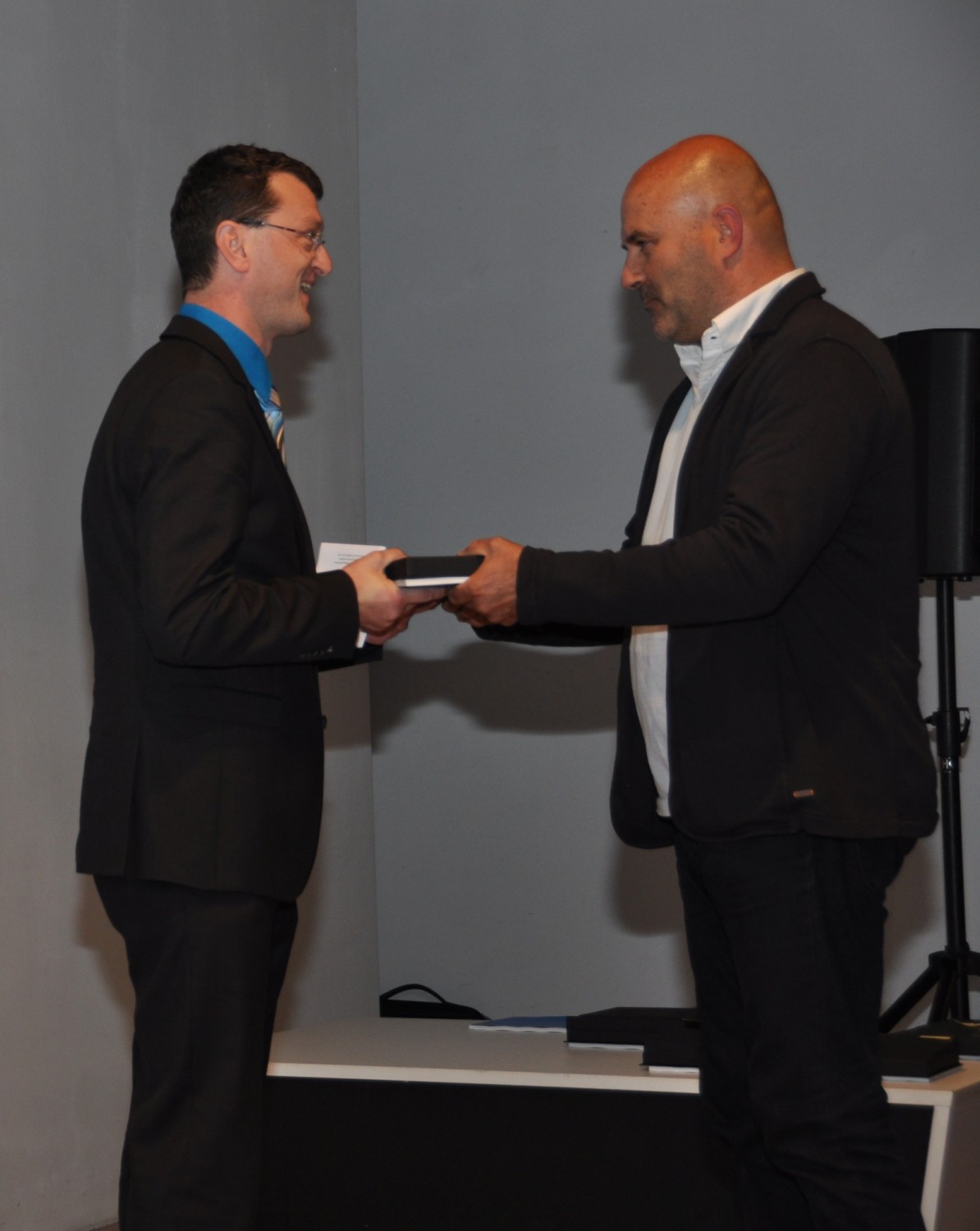
Director of St. Stanislav’s Institution Dr. Roman Globokar accepted the prize
The Chamber of Architecture and Spatial Planning of Slovenia conferred on 9th October, 2015 professional awards for the most important achievements in architecture, landscape architecture and spatial planning. The Golden Pencil award for the outstanding realization in architecture and spatial planning was presented to Studio UR.A.D. for the project of The Alojzij Šuštar Primary School.
From the award justification:
This substantial annex accommodation appears to draw itself out from its historic institutional context as if to free from former constraints and regulations, creating new space, meaning, and occupation with distinct qualities of lightness and a sense of liberty.
The new development is unabashedly contemporary, set as it is against the backdrop of its predecessor in both form and scale. Yet it has been carefully conceived to sensitively align with the existing by following the grain of the former, maintaining a central spline through the site, and at its perimeter reading. This approach has interestingly allowed a somewhat previously out of place detached sports hall, to now be successfully integrated within the overall ensemble. In fact it is the clever structuring of external spaces set between these features, in conjunction with the introduction of two new positive entry facades and adjoining activity spaces, that stand out to demonstrate an accomplished degree of planning, whereby these built forms have been unified in a kind of natural progression.
Internally, new school accommodation spreads in wings from a central atrium cum assembly hal1/ auditorium featuring direct engagement with extei’iia1 landscape areas at ground level and light-filled classroom spaces on the first floor to provide positive, purposeful facilities. A substantial new multi-function gymnasium hall set partly into the ground, along with ancillary accommodation, is included, yet these elements have been structured so as to be subservient to the primary facilities.
A delightful and beautifully conceived additional feature comes in the form of a small chapel set floating within the main auditorium space. This discrete piece, with its oblique entry, modest adornment and well considered detail, is further example of a successful yet unpretentious overall design.
It will be interesting to see how external landscaping work develops in and around the new accommodation as these external rooms offer further opportunity to enhance the overall scheme.