Warning: Undefined property: WP_Error::$term_id in /var/www/vhosts/stanislav.si/en.stanislav.si/wp-content/themes/stanislav/archive.php on line 22 HOME > NEWS AND EVENTS >
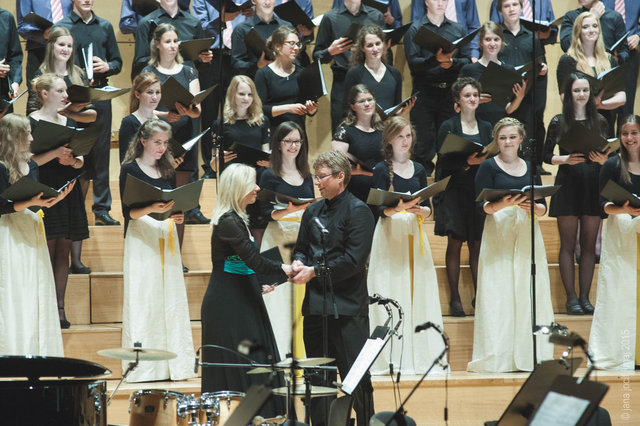
Composer Damijan Močnik congratulates the soloist Marta Močnik Pirc after the premiere performance of Slovene Requiem (photo Jana Jocif)
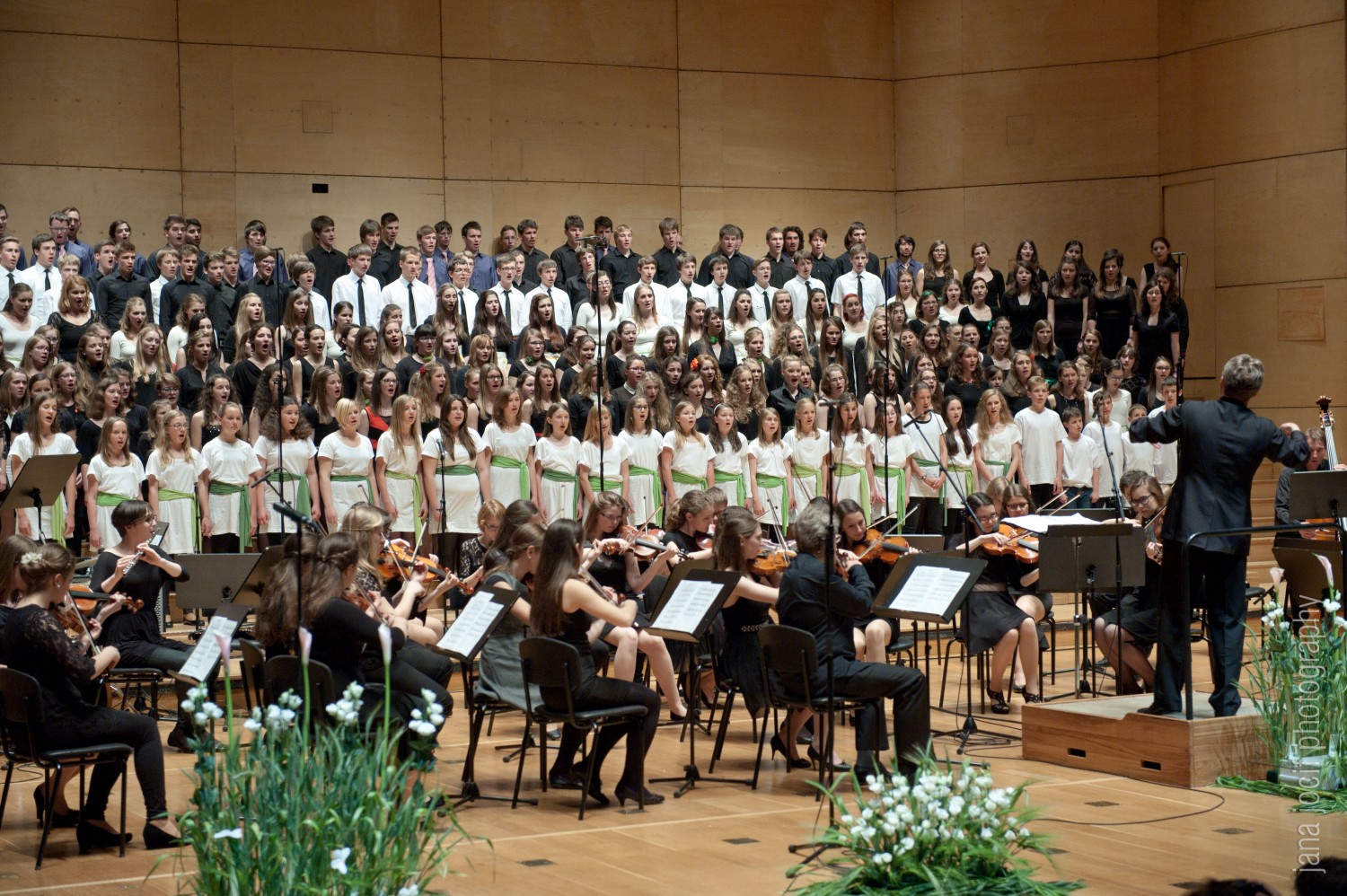
The Slovene Requiem’s premiere was given on 10th May, 2015 at the 22nd annual concert of the choirs and orchestra of St. Stanislav’s Institution in Cankarjev Dom, Ljubljana.
Anniversaries and memories are often an incentive and inspiration to create new compositions or other works of art. War is mostly perceived as a conflict between states, nations, religions or ideologies, behind which the stories of individuals and families who were caught in its turmoil are actually revealed. The Deliver Me, Anti-War Song /Libera me – Carmen Adversus Bellum/ is a unique anti-war composition, in which in addition to the passage from the Requiem on the apocalypse and man’s fear of death, the lyrics of a heart-breaking Istrian folk song Who Would Like to Mow My Grass? /Ki Će Moju Travo Kosit/? were used. Music clearly depicts man’s fear of hostile forces and his plea for salvation. For quite some time, I had been thinking of composing a requiem for all Slovene victims of 20th-century war, evil, violence, and massacres. Having read various historical and literary texts and thus became acquainted with different perspectives of people involved in this terrible chaos of hatred and violence, I decided, after careful consideration, for love to be the common theme of my composition. The Slovenian Requiem is, therefore, not a complicated and ostentatious piece of music for a big ensemble, but a simple composition for solo soprano representing an individual and mixed choir representing a crowd. They are accompanied by ison, which is not only a drone note or a slow-moving lower vocal part used in Byzantine chant, but also a foundation of the melody, which adds a touch of festivity and power. The text is composed of different passages from Sophocles’ play Antigone, Dominik Smole’s play of the same title, Gregor Strniša’s poem Willow /Vrba/, John’s Gospel, and Latin Mass for the dead.
The Slovenian Requiem is a strong rejection of hatred, a fervent wish for forgiveness and mercy as well as a firm decision for love and peace. I dedicate this piece of music to all Slovenes to come together and create a future of mutual understanding, tolerance, respect, and love.
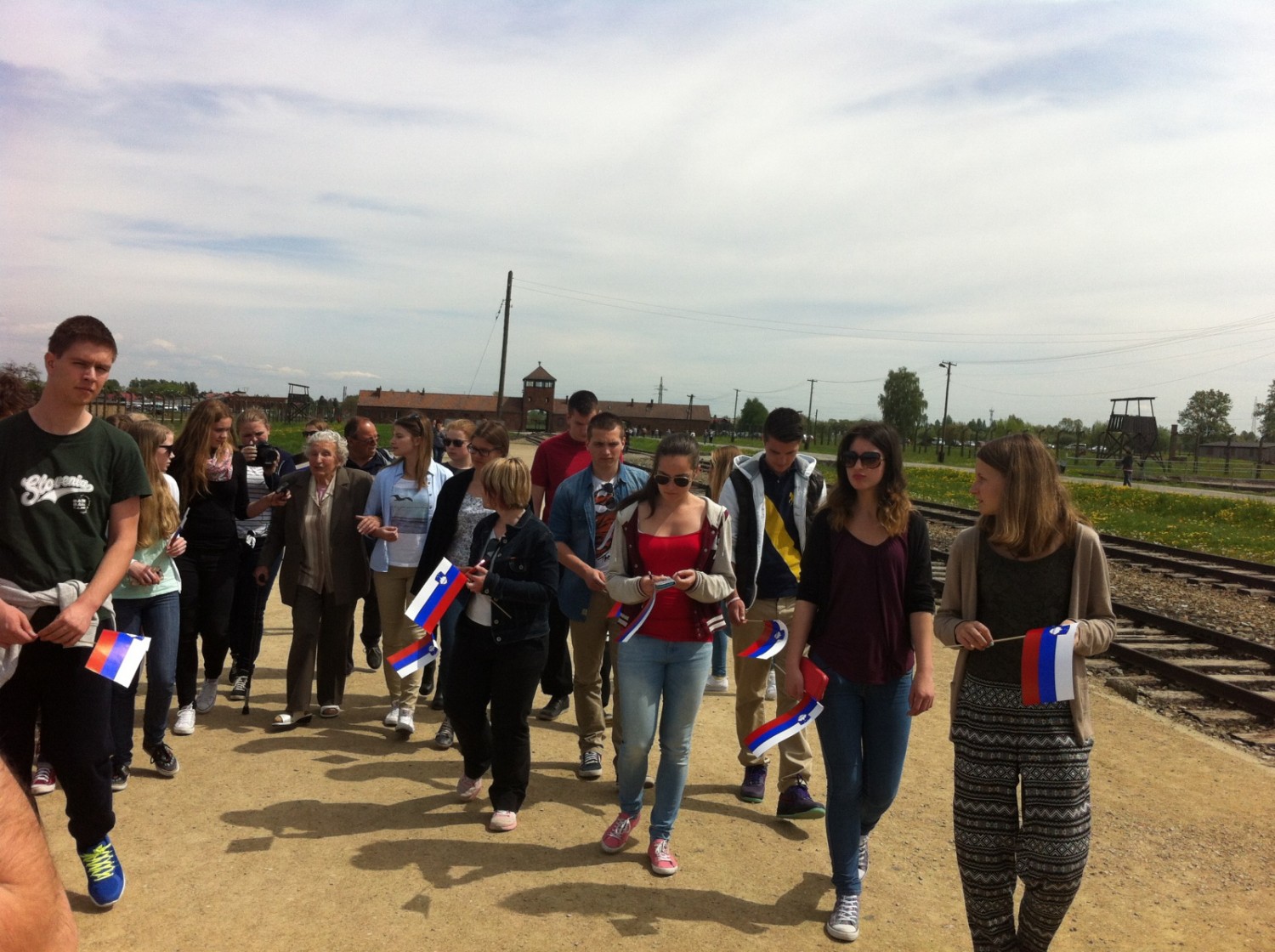
To commemorate the 70th anniversary of the end of WW II, students from DCG, Prva Gimnazija Celje in Prva Gimnazija Maribor traveled together to Poland and visit the Auschwitz Memorial and Museum from 6th-20th May, 2015. Accompanied by several Slovene history experts and a witness from Auschwitz, the students had a chance to get to know and understand better circumstances and facts about the biggest concentration camp in Europe and how it is related to the Slovenes.
At the same time more than 1000 students from Belgium and other European countries were there for the commemoration. Before going to the Memorial Centre in Auschwitz, the DCG studetns met Polish students from the partner school in Krakow.
The goal of this trip was to get to know and understand the common European history, encourage tolerance and values of democracy. The coordinator of the visit in DCG was Daša Oberč.
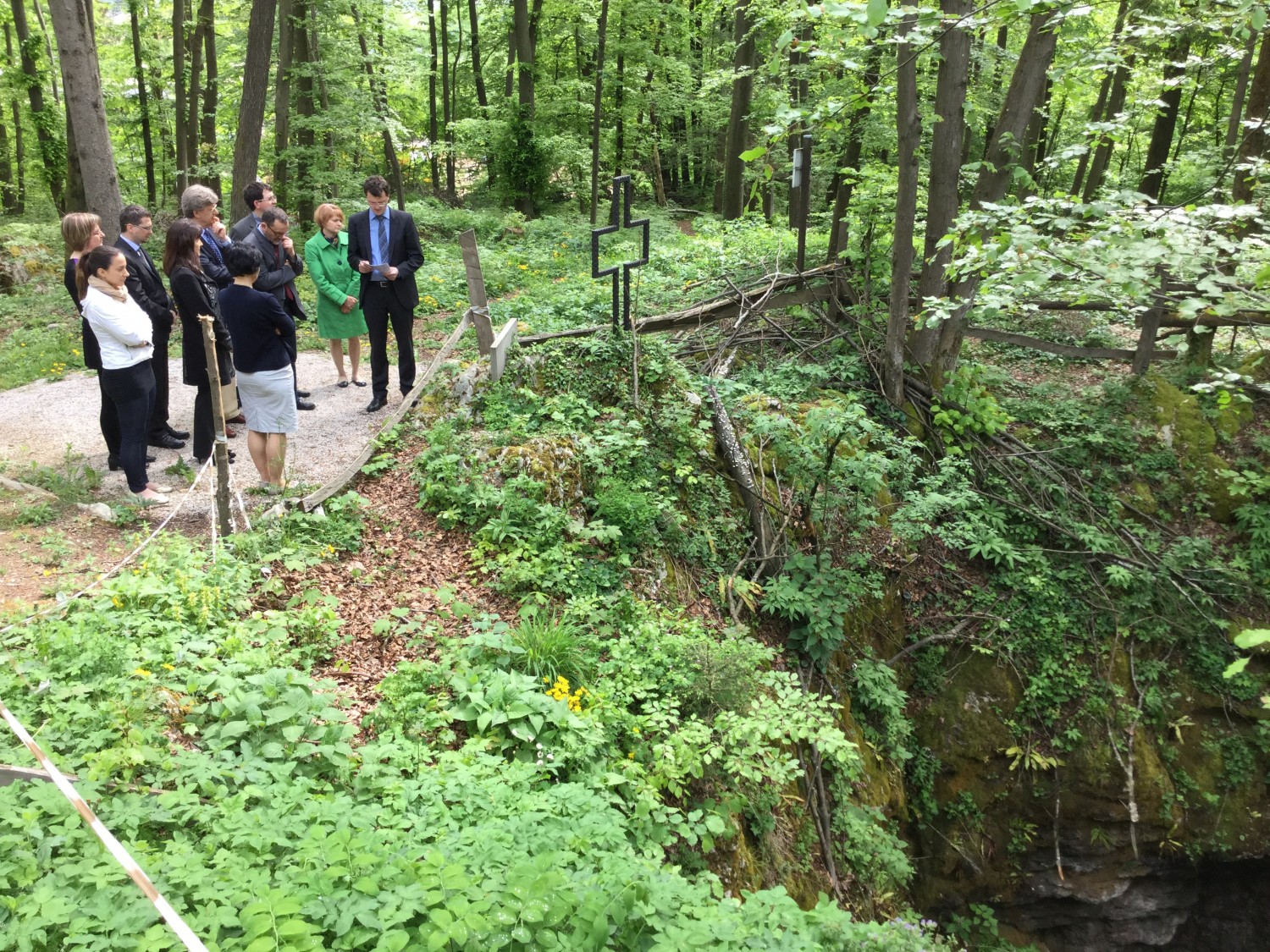
The school leadership of St. Stanislavs’s Institution visited on 4th May, 2015 the Brezar Cliff (Brezarjevo brezno) in Podutik in the vicinity of the capital city of Ljubljana. In prayer we paid respect to all victims who were murdered in this place in May and June 1945. About 800 prisoners of war who were hold captives in the concentration camp in St. Stanislav’s Institution were brutally murdered and thrown into the 75-meter deep abyss by revolutionaries at the end of WWII. As the decaying bodies soon started to contaminate water in the nearby brook, the German prisoners of war were forced to excavate the murdered and burry them in the close Kucja valley (Kucja dolina) where they still lie today. On the occasion of the 70th anniversary of these ghastly acts in the Slovene History we pray for all victims, educate the young about the horrendousness of totalitarian systems and strive to promote the Slovene national reconciliation.
Roman Globokar, Ph.D.
Cordially invited to the traditional concert, which will take place on Sunday, 10th May, 2015 at 6.00 p.m. in Gallus Hall in Cankarjev Dom (Ljubljana). More than 430 singers and instrumentalists from primary school to gymnasium and alumni will present what they have been creating throughout the school year. The concert is dedicated to the centennial commemoration of the beginning of WWI and the 70th anniversary of the end of WWII, that is the reason why it bears the title » I am here to love, not hate. « In the first part the musical works on war and peace by Močnik, Lebič, Mendelsson and Schnittke will be performed. In the second, the joy of music making will be presented and finally concluded with works by Karl Jenkins and all performers on the stage.
Tickets are available in St. Stanislav’s Institution (call ++386 31 708 313), or on the concert day, an hour before the beginning of the concert in the first foyer in Cankarjev dom.
Lily Schweiger Kotar
Four teachers of English at St. Stanislav’s Institution, The Diocesan Classical Gymnasium – Alenka Battelino, Eva Pišljar Suhadolc, Valerija Lah Peternel and Lily Schweiger Kotar – attended a CLIL course (Content and Language integrated learning) for secondary teachers from 20th-25th April 2015, which took place in International Project Center, Exeter in England, as a part of KA1 learning mobility of individuals . The group was joined by another History teacher from Jerez, Spain. The purpose of attending such a course was to acquire knowledge and specific know-how from good practice in the UK and with an enthusiastic and understanding teacher, develop our own competences and increase the relevance of our teaching. Last but not least we wanted to increase knowledge of social, linguistic and cultural matters as well.
During the entire week we tried to grasp the implications for the CLIL classroom, which include critical and creative thinking, code-switching, collaborative and active learning as well as including the so-called lower order thinking skills (LOTS) and higher order thinking skills (HOTS).
Taking part in the course meant constantly implementing CLIL elements in our everyday work as well, which resulted in a practical demonstration of skills acquired by the teachers involved. One group of teachers presented a science task including features of CLIL, the other group presented in a similar way female British writers set in different historical, social and geographical context. The acquired skills and language teaching methodology were implemented to regular schoolwork at home, informing first other teachers of English at school, the headmaster and the School Development Team. One of the most beneficial aspects of CLIL’s approach is teaching language and content at the same time as you have to pay attention to language as well as content. /Lily Schweiger Kotar/
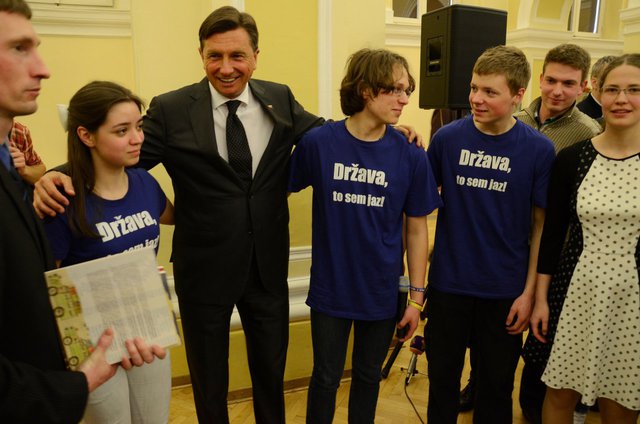
On the initiative of student members of the DCG socio-political club, president of the Republic of Slovenia Borut Pahor, president of the New Slovene Testament, Peter Sušnik and the General Secretary of the League of Association of Veterans for Values of National Liberation War in Slovenia Mitja Klavora joined for a panel discussion on reconciliation regarding WWII divisions. President Pahor moderated this “unprecedented event”, as he labelled it, which took place on 14th April, 2105 in St. Stanislav’s Institution, Ljubljana. The title of the meeting were the suggestive Antigone’s words: »I am here to love, not hate«.
The discussion on the views of the recent Slovene history was marked by different, even opposing, standpoints, but also by the intention of dialogue continuation. Regardless this fact, the meeting was as Pahor said »something good«. The discussion was concluded with the appeal for a certain amount of tolerance. Some people are bothered by one thing, some by another, nevertheless, he is convinced that »we share more things in common«.
Students who participated were mostly critical of the fact that they did not have enough opportunities to join in with questions, which still remain unanswered. Student Lucija believes that »there was a lot of talking, but not much was said. I had the impression that Mr Sušnik and Mr Klavora were not actually talking to each other. « Student Vid is still waiting for an answer to his question, which proves to be a crucial one: « Who are we trying to reconcile with? Until we do not answer this question (each and all of us), all further discussion is futile. If there is nobody to reconcile with, there is no need for reconciliation. «
Lily Schweiger Kotar
The students of the DCG from the French Drama Club participated for the second time in the observation of the International Francophonie Days in Celje, Slovenia. On World Theatre Day, March 27th , 88 students from 13 different Slovene high schools gathered to stage a contemporary performance in French, namely the L’Européenne by David Lescot. Directed and assisted by two young French artists, Slovene students set up this project, which is unique also in a broader European context, and demonstrated some amazing teamwork. The students of DCG worked under the mentorship of Daša Obrč.
President Pahor and two other guests, Tit Turnšek and Peter Sušnik, will meet students of The Diocesan Classical Gymnasium on Tuesday, April 14th at 2.30 p.m. in the Matija Tomc Hall (St. Stanislav’s Institution). The panel discussion in the remembrance year will be conducted under the title »I am here to love, not hate« (Antigone by Sophocles).
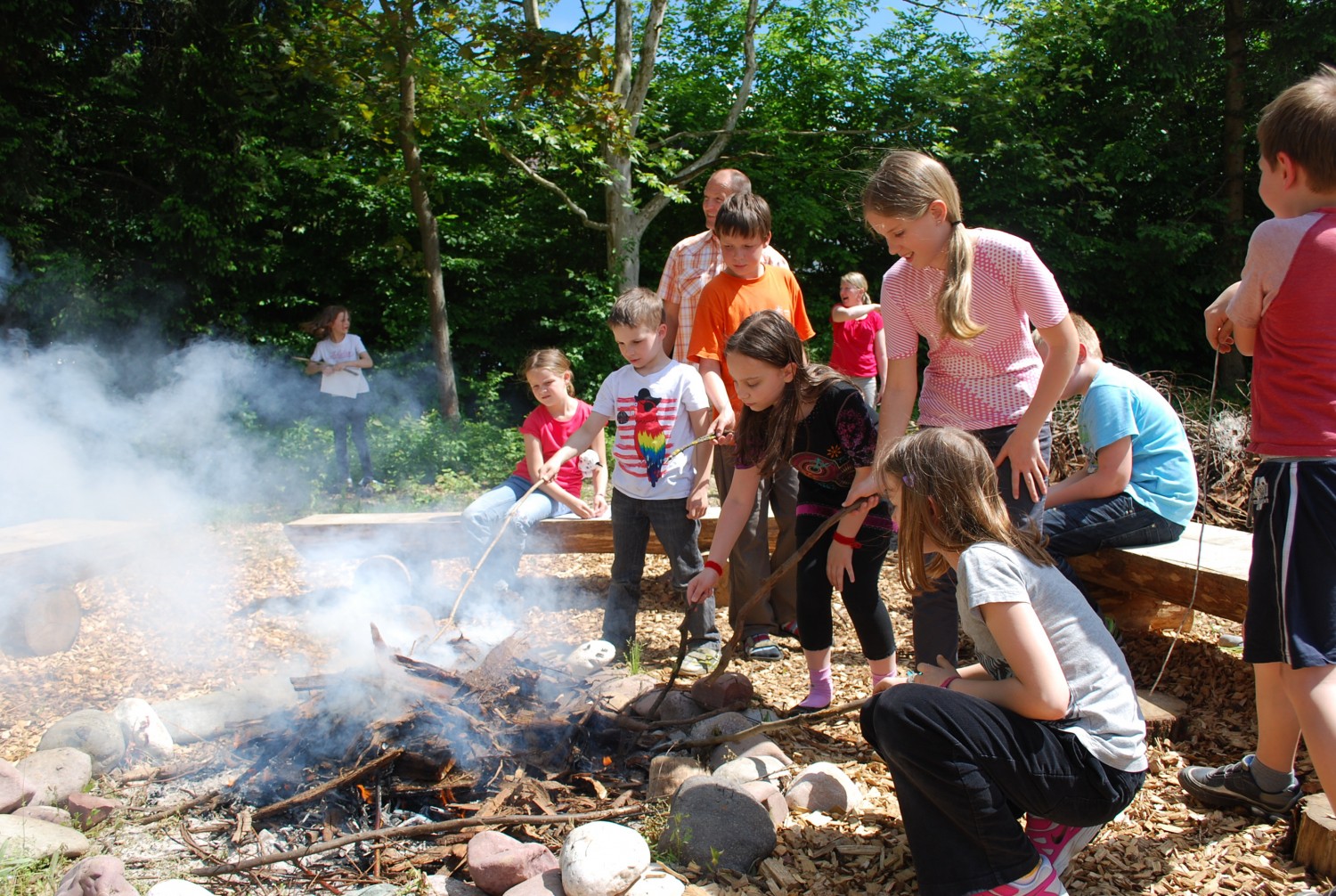
In January 2014, Alojzij Šuštar Primary School started a two-year project named Outdoor Learning. Our partners in the project are primary school Borge skole (Fredrikstad, Norway) and Slovenian Catholic Girl Guides and Boy Scouts Association.
The main goal of the project is to improve our methods in outdoor learning, to learn new approaches and techniques from the partners, to adapt and use them in working with our pupils. We are hosting teachers and pupils from Borge skole in April and we will visit them in May. Besides showing each other the improvements we have made since last year, we will spend quality time together and share new ideas and knowledge we have gained.
The project coordinator at our end is Ela Rupert.
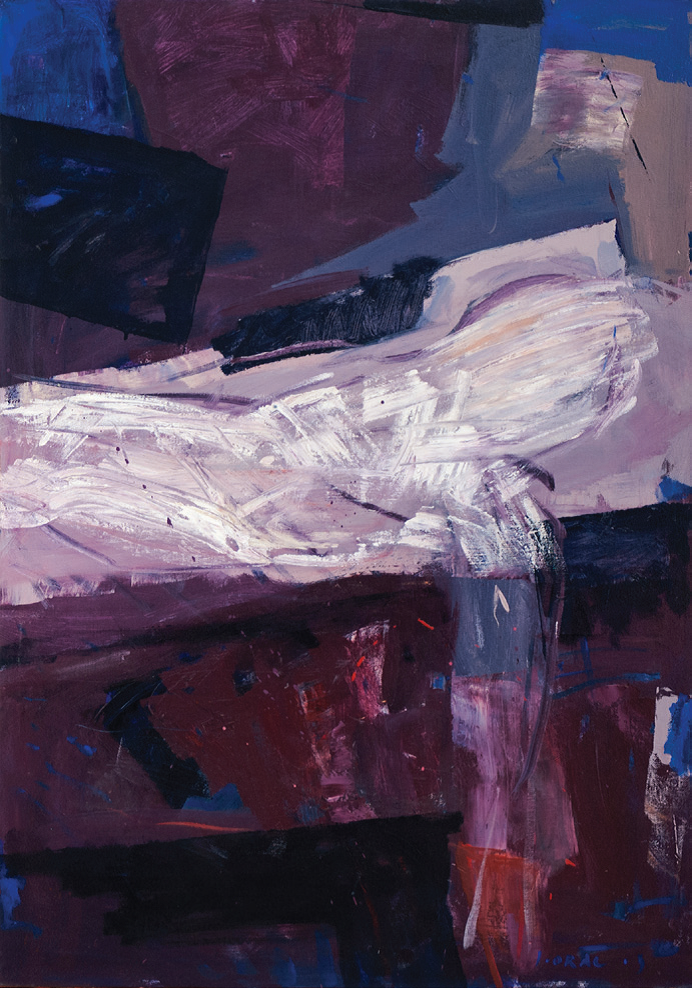
Janko Orač, 14th Station of the Cross: Jesus is laid in the tomb, acrylic on canvas, 100×70 cm, 2009
He is laid in a tomb. The sign of a cross appears from the stone tomb, from his anointed body, It enters into the bosom of life. As a sign of birth, as a sign of death, as a sign of suffering. Suffering. As a sign of joy. And a sign of Love. So inconceivable. Endless. Incomprehensible. Eternal love. Will you, the Spirit of God, eradicate the evil rooted in our flesh?
(14th Station of the Cross, Dane Zajc)
The suffering and pain of today’s world are also filled with the joy of resurrection. May the celebration of Easter be a source of abundant hope that love is stronger than hatred, forgiveness better than revenge and life more powerful than death. We wish you a happy Easter!
Roman Globokar, Ph. D. Director
Warning: Undefined property: WP_Error::$term_id in /var/www/vhosts/stanislav.si/en.stanislav.si/wp-content/themes/stanislav/sidebar.php on line 132
Latest posts under Warning: Undefined property: WP_Error::$cat_name in /var/www/vhosts/stanislav.si/en.stanislav.si/wp-content/themes/stanislav/sidebar.php on line 136
: