Warning: Undefined property: WP_Error::$term_id in /var/www/vhosts/stanislav.si/en.stanislav.si/wp-content/themes/stanislav/archive.php on line 22 HOME > NEWS AND EVENTS >
If these become silent, the stones will cry out(Lk 19,40)
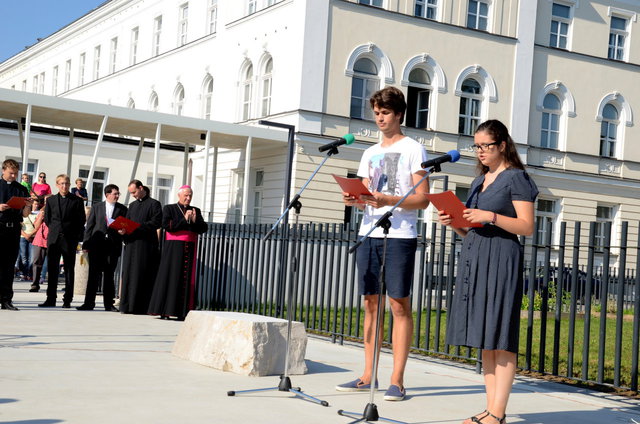
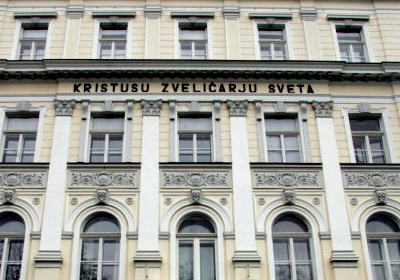
St. Stanislav’s Institution endured bright and dark moments in the history of the 20th century. Its creative life was first interrupted by WWI, when a large area of the building was turned into an army hospital. During WWII there was first a Nazi camp to assemble Slovenes who were to be expelled from the homeland, and immediately after the war the institution served as a concentration camp for the extermination of anticommunists. Most of the prisoners were taken to Kočevski Rog or other massacre sites in Slovenia. St. Stanislav’s Institution has thus become on several occasions a place of extreme human suffering. The memorial site Peace be with you honours all victims who suffered in this place. Visitors are invited to embrace silence, consider the respectful memory of the victims and refrain from any hatred and violence.
The memorial consists of seven stone blocks, which like the prisoners who occupied this space seventy years ago lie scattered over the entire area of St. Stanislav’s Institution. Five blocks can be found in the park and on green lawns, one is at the forum, and one is in the main building. The stone blocks are reminiscent of ruins, the ones in the park of nameless graves. Instead of names, the words Peace be with you (3 Jn 1,15), are engraved in the languages of those who suffered while here or after they were taken to execution. Are the seven stones actually seven graves? Are the engraved words possibly the voice of the dead, coming from the grave, or are these the words through which I would, if I could, talk to my dead brother? The memorial epitomizes Jesus’ answer to the question, how many times I shall forgive?: “I do not say to you seven times, but seventy-seven times.”
Peace be with you was designed by architect Robert Dolinar in 2015 to comemmorate the 100th anniversary of the beginning of WWI and 70th anniversary of the end of WWII. The commemorative year was observed in St. Stanislav’s Institution under the motto: “I am here to love, not hate.”
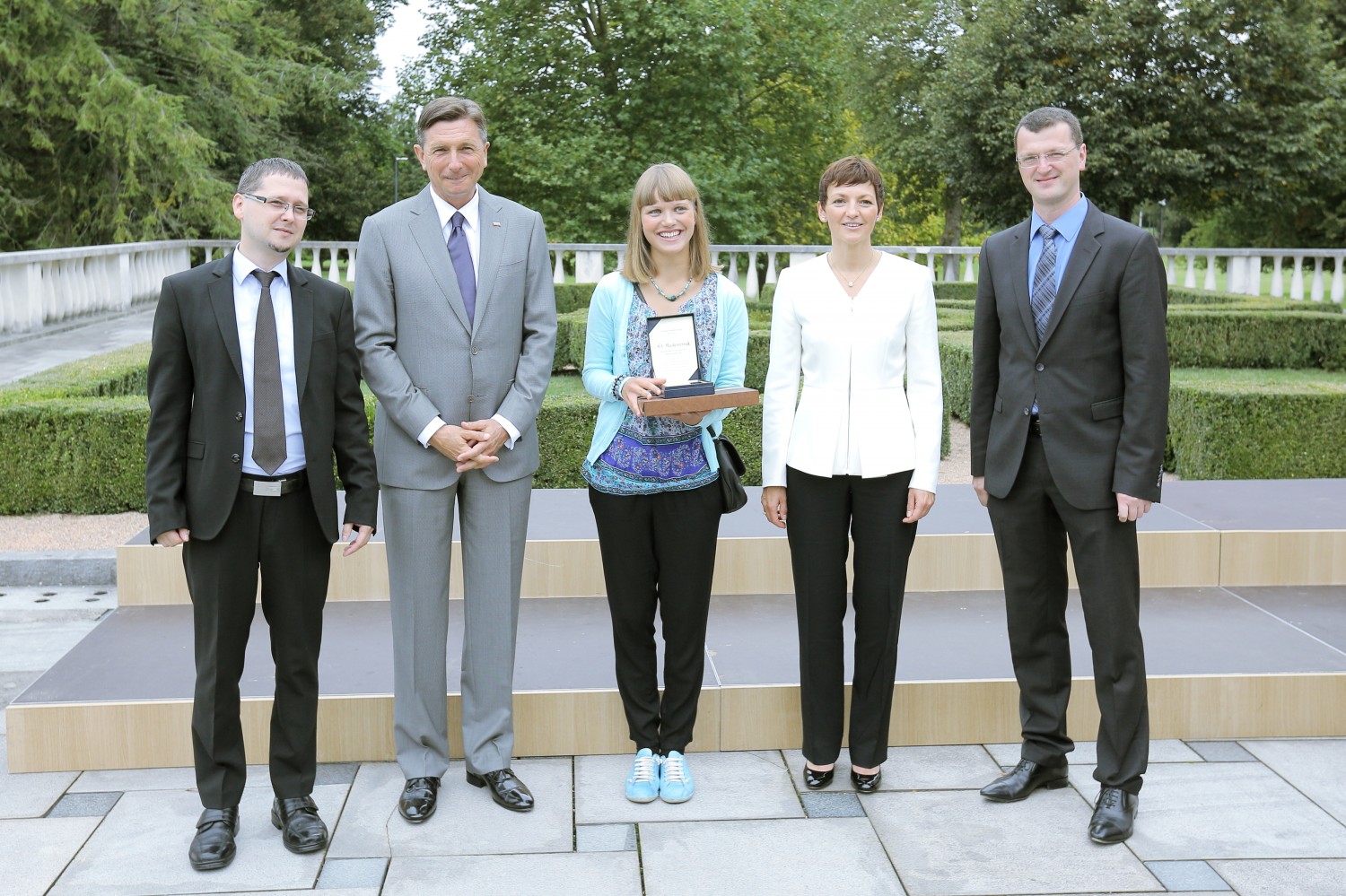
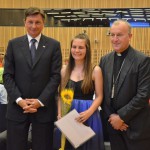
Ela Hudovernik (in the middle) with the award plaque
President of the Republic of Slovenia Borut Pahor and the Minister of Education, Science and Sport dr. Maja Makovec Brenčič received on Saturday, 19th September, 2015 the cream of the crop of this year’s high-school Slovene graduates, who attained all possible points at Maturity examination. There are eighteen such graduates in Slovenia this year, among which also Ela Hudovernik, the DCG student, who not only gained all 34 points, but also obtained the best possible result in the country in mathematics. We congratulate Ela on her outstanding achievement and wish her all success in her future endeavours.
The PE teacher from St. Stanislav’s Institution, The Diocesan Classical Gymnasium Joži Čepon attended from 23rd July – 2nd August 2015 a course entitled In Search of the Azores. There were 8 participants altogether from Finland, the Netherlands, Spain, Greece, France and Slovenia. Each participant had to write a seminar paper on a topic that presents a part of the cultural heritage of his/her country. The organizers designed a booklet and all our contributions were published there. My paper had a title Triglav – Mountain of Slovene Mountains http://chain.eu/?m3=38746. In this way participants have learned something about the national heritage of all the above-mentioned countries.
The course concentrated on two themes. Firstly it focused on the concept of Europe. Europe is the Western part of the Eurasian continent, comparable to the Indochinese peninsula in the South-East. Taking thins into consideration, the Mid-Atlantic ridge can be seen as a geographical border of this (sub-) continent. The Azores and Iceland are surface manifestations of this ‘edge’ – Europe ends here. The second focus lied on the ‘urge to the west’ in Europe, which considers the Atlantic as a barrier and a challenge. In European history there is a trend of trying to reach the ‘evening land’. There may be an urge to ‘follow the sun’, to pass ‘the pillars’. Both aspects gave us a perspective to the Azores’ unique geographical and cultural heritage: landscape and volcanoes; discoveries, colonisation and migration; whale hunting and fishing; ecology and the oceans as part of the world. The course was a wonderful travel through four elements: fire creating the archipelago – volcanoes and earth; water being the birth of the archipelago and all life; air/wind – man sailing into the unknown land, discoveries and whale hunting.
I broadened my horizons and obtained lots of new knowledge about these wonderful islands, which are a perfect destination that I will recommend to my students for spending active holidays. During the course, we were very physically active in difficult moist conditions so I, as a sport teacher, took it as body training for the next school year. /Joži Čepon/
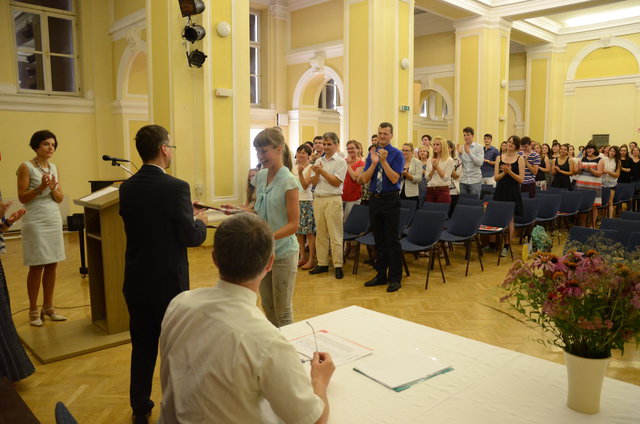
DCG’s Headmaster, Simon Feštanj, congratulates Ela Hudovernik on her outstanding Maturity Exam results
In the academic year 2014/15 already the 19th generation of DCG graduates has completed its education in St. Stanislav’s Institution. 2972 graduates have graduated since its reestablishment in 1993.
On the Maturity Exam results day, 13th July, 2015, graduates gathered to receive the Maturity Exam reports. This year 152 graduates appeared in the exam, the pass rate was 98,7%. The average point rate in 2015 at the DCG was 23,49 (last year 22,78), nationally 20,12. Out of total 34 points, 36 graduates gained 28 points, and 17 more than 30 points (nationally there are 320 of such graduates), which makes them Golden Graduates 2015. By far the most successful student this year is Ela Hudovernik, who has gained the maximum 34 points and scored the outstanding 100% at higher level mathematics examination, which is the best result in the country. The director of St. Stanislav’s Institution dr. Roman Globokar congratulated the graduates on their achievement and expressed enthusiasm for excellent exam results.
School is over and so are the maturity examinations, most of the planning for the following academic year as well as end-of-the-year trips for the employed in St. Stanislav’s Institution. We wish students, parents and teachers a joyous and relaxed time to rest their bodies, souls and mind. Let God guide your steps and see you at latest on September 1st.
Nastaja Maver with President Pahor and Auxiliary Bishop of Ljubljana dr. Anton Jamnik
Congratulations go to Nastja Maver, who is currently a student of special and rehabilitation education at the University of Ljubljana. The award has been granted by the Youth Council of Slovenia under the auspices of the president of the Republic of Slovenia Borut Pahor and on the recommendation of The Slovene Association of Catholic Teachers, where Nastja takes active part in the program Man for others. In the past academic year she has carried out more than 1000 hours of voluntary work in various kindergartens, school and other institutions.
Commemorative celebration in St. Stanislav’s Institution on the occasion of the centennial of the Isonzo Front and the 70th anniversary of the end of WWII and post-war massacres
The commemorative celebration was to honour the memory of past events and as a warning to future generations. The celebration took place on Thursday, 18th June, 2015, beginning with mass at 8.30 p.m. in St. Stanislav’s Chapel. The military chaplain Jože Plut celebrated the mass. At 9.30 p.m. during the commemoration the lights in the building of St. Stanislav’s Institution were going out. Every dead light memorises the pain and loss of man, who had a name, family name as well as fate and light within himself. In the park surrounding St. Stanislav’s Institution the remembrance candles were lit as a reminder of past atrocities. All people throughout Slovenia were kindly invited to light the remembrance candles in their homes to commemorate the victims of WWI and WWII and post-war massacres.
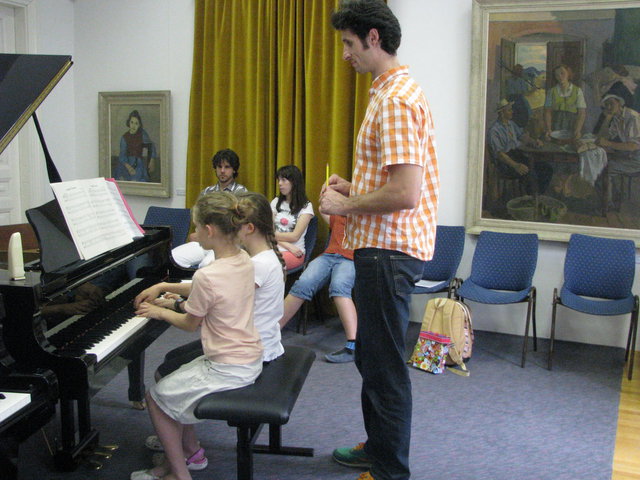
Jure Rozman teaching young pianists in Music School in St. Stanislavs’ Instiutiton
All music lovers were happy to attend the concert given by pianist Jure Rozman on 11th June, 2015 at 7 p.m. in Matija Tomc Hall in St. Stanislav’s Institution. He performed a versatile programme consisting mostly of works rarely presented in Slovenia.
Jure Rozman, was born in Slovenia, where he started his musical education. He continued studies at the University Mozarteum in Salzburg (Austria), where he studied with Karl-Heinz Kämmerling and graduated there in 2001. He completed his Masters and Doctoral Degrees at Louisiana State University (USA) as a student of Constance Carroll and Michael Gurt, and has won numerous awards, including the first prizes in Slovene National Piano Competition in 1995 and 2001, and second prize at the international piano competition in San Bartolomeo al Mare (Italy). He has performed as a soloist with Slovene Youth Orchestra, Slovene Philharmonic Orchestra and LSU Symphony Orchestra, and has frequently presented solo and chamber music recitals in Slovenia, Austria, Italy, Croatia and USA. He has also been active as a vocal coach. Presently he is an Assistant Professor of Piano and Music Coordinator at Broward College in Fort Lauderdale. (Florida, USA).
Congratulations go to Tina Dernovšek from 3.b class, who created a new design for Sidharta’s T-shirt. The rock band Sidharta is the biggest name on Slovenia’s music scene. Tina eliminated the tough competition of sixty Slovene designers. New T-shirts will soon be available at all Sidharta’s concerts in Slovenia and abroad. Tina was awarded at least five backstage parties at Sidharta’s concerts.
Tina is an active member of the Graphic Design Club of the DCG, which started in September 2014 and is led by Nina Malovrh, an industrial designer and DCG alumni. In this club the students have gained basic skills in graphic design, which have already been applied to some concrete tasks.
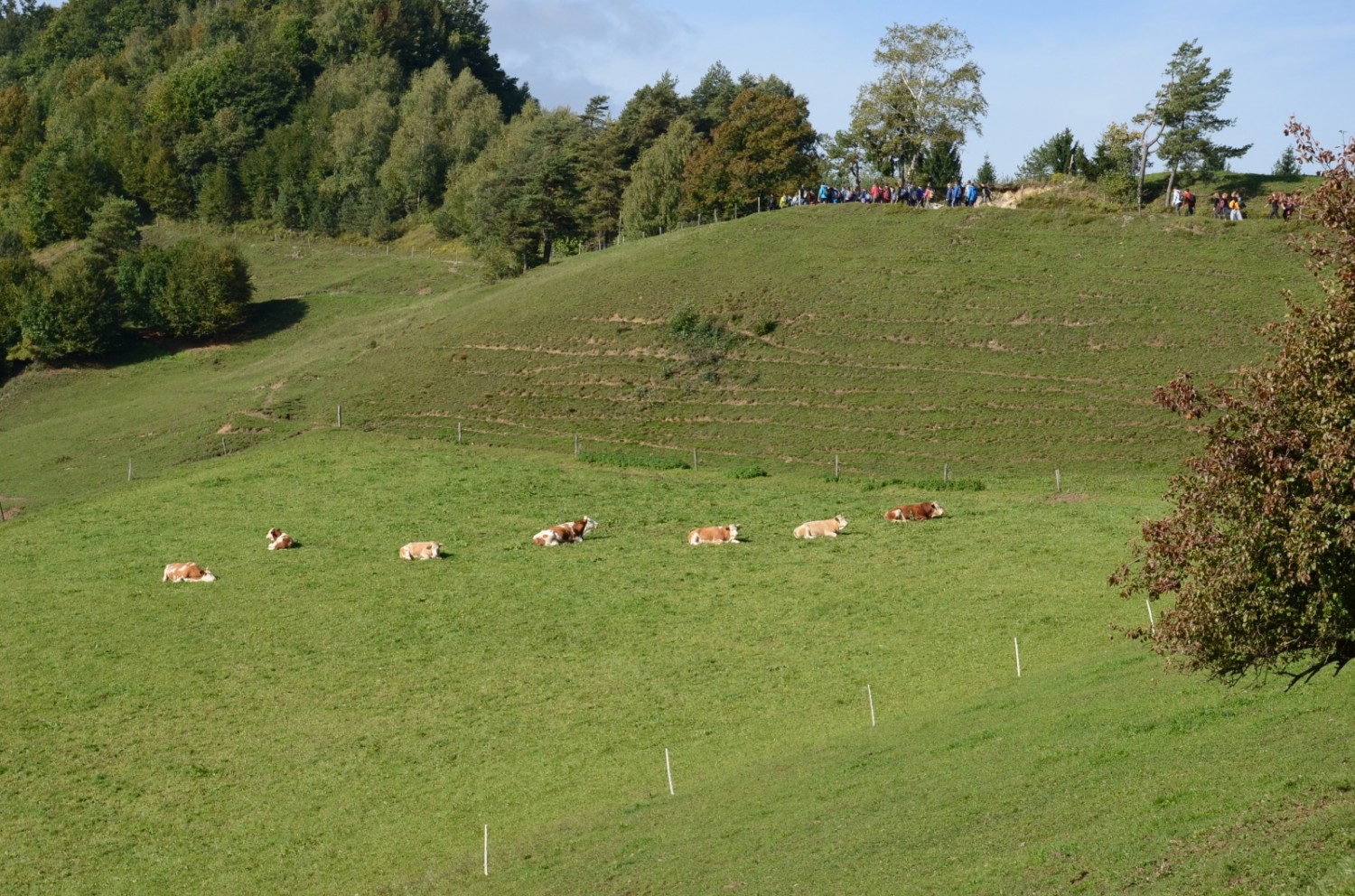
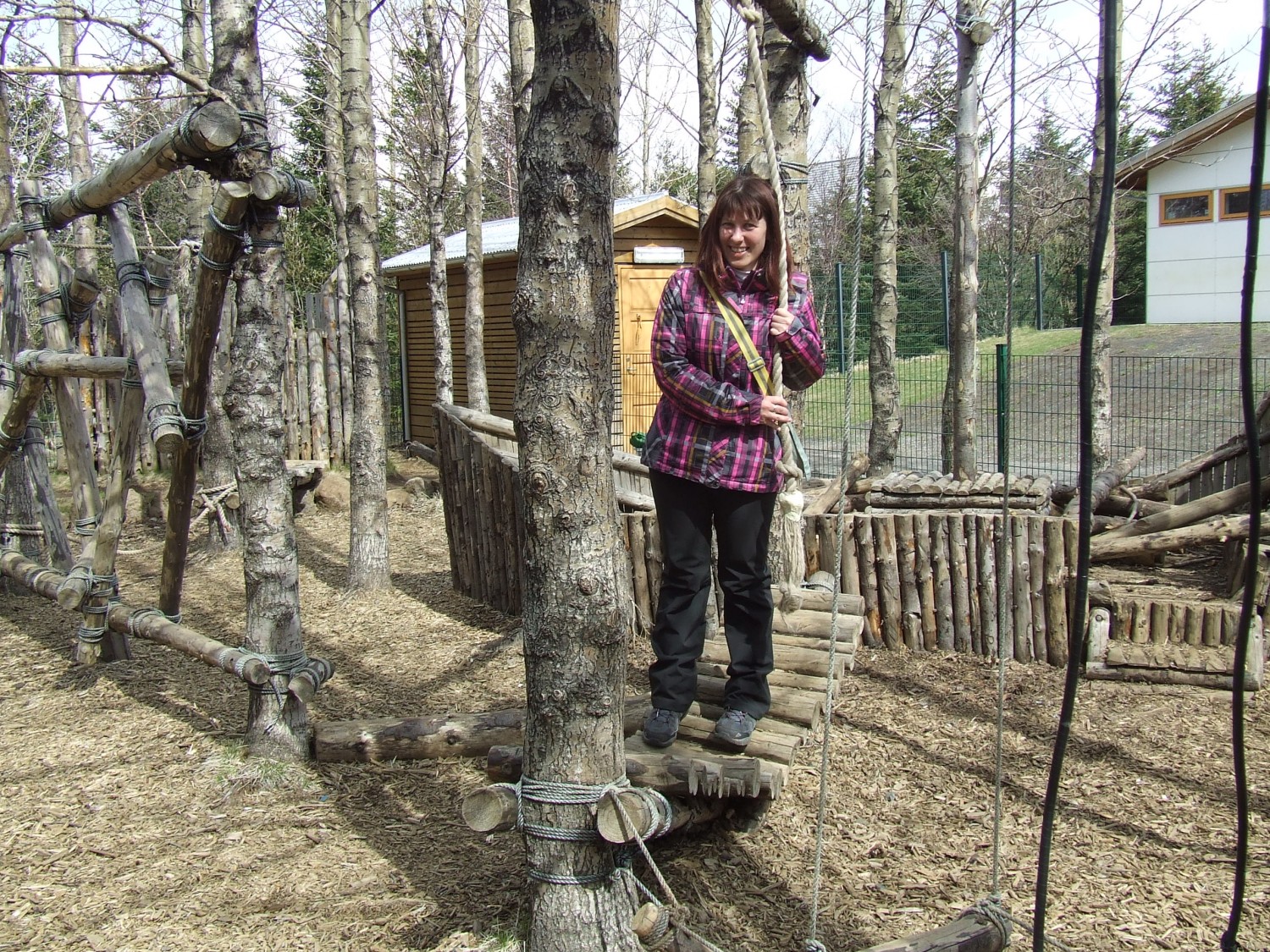
Outdoor learning – a great way to acquire knowledge
As a part of the Erasmus+ project for teachers, two teachers from St. Stanislav’s Institution, The Alojzij Šuštar Primary School took part in a seminar entitled Outdoor Education, Landscape and Outdoor Venues – Learning under Open Sky, which was held in Iceland between 16th – 23rd May 2015. There were 14 participating teachers from Finland, France, Austria, Poland, Greece and Slovenia.
Theoretical foundations of outdoor education gave us an insight into the importance of outdoor learning, whereas practical experiences obtained encouraged us to conduct more classes outdoors. Since at the Alojzij Šuštar Primary School we strive to conduct as many classes as possible outdoors, we embraced the programme enthusiastically. Examples of team building, presentation of venues that the Icelanders use for teaching outdoors, visiting a primary school, cooking in the woods and making handicrafts using natural materials are some of the many examples of good practice that we will not forget and try to apply in Slovenia as well.
At a teacher conference at the Alojzij Šuštar Primary School we gave a lecture on what we had learnt in Iceland to our colleagues. In addition, we also held a workshop on experiential learning at an international conference on outdoor education that was organised at our primary school on 10th October 2015. /Maja Čuk, Nuša Arnež/
Warning: Undefined property: WP_Error::$term_id in /var/www/vhosts/stanislav.si/en.stanislav.si/wp-content/themes/stanislav/sidebar.php on line 132
Latest posts under Warning: Undefined property: WP_Error::$cat_name in /var/www/vhosts/stanislav.si/en.stanislav.si/wp-content/themes/stanislav/sidebar.php on line 136
: