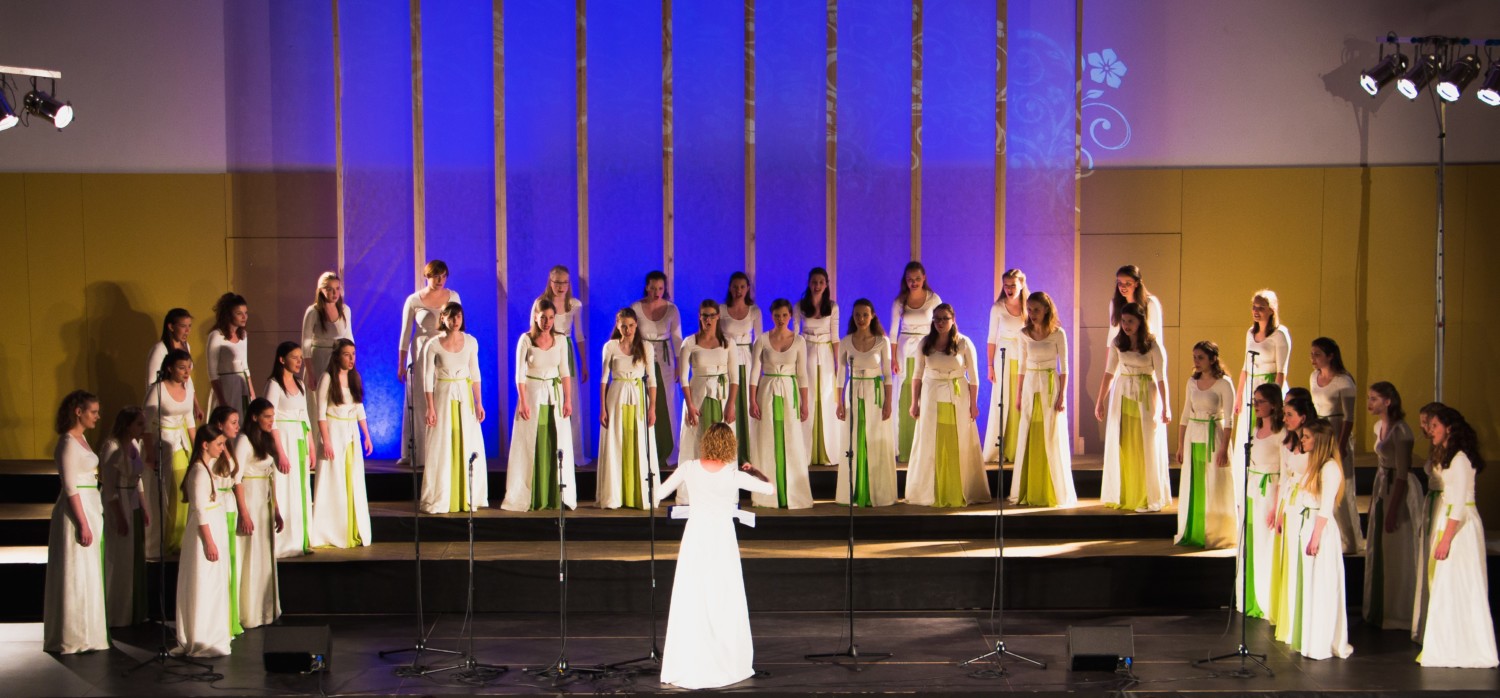
If you want to listen to one of the greatest choirs in the world, this is your chance! The concert will take place on Wednesday, 21st July 2021 at 9 p.m. in Cultural and Congress Centre Cankarjev dom in Gallus Hall. The first part of the concert will feature the Slovene composers from Gallus to Bec, Čopi, Močnik and Vovk. The second part will offer two world premieres by international composers like Jennefelt, Ešenvalds, Patriquin, Hyokki.
The night will be a perfect realisation of St. Stanislav Girls’ Choir mission statement, which is summarized in the words Sharing My True Self. The girls share discipline, hard work, compliance, focus, trust, vigour and naturally a love for singing. The moment a beautiful sonority is created, it is time to pass it on through concert performance. You do not want to miss this, right? When sharing their true selves in front of the audience, the girls become an inspiration for others and the mission is accomplished. We shall be honoured if you could join us.
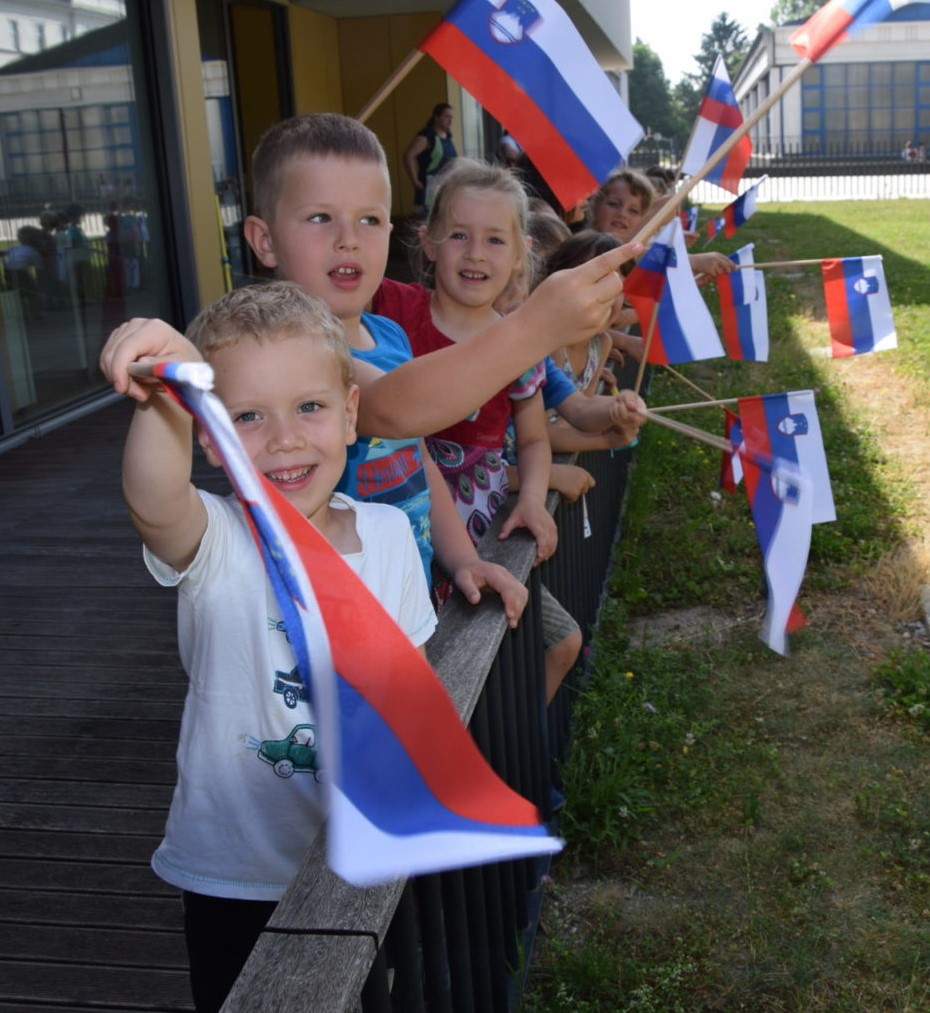
The director of St. Stanislav’s Institution, Anton Česen, M.A., addressed the employees at the end of the school year to mark the 30th anniversary of Slovene statehood.
“I wish to extend my sincere thanks to everybody in this institution at the end of this school year on the day, when pupils and students receive the reports and honourable mentions. At the same time I congratulate you all for the 30th birthday of the Slovene state. This school year has been so different from any prior year. Thank you all for your courage, innovativeness, adaptability, patience, responsibility and trust. I am sure that this year everybody has learned something new, so let us keep and cherish this as a token of hope for the future to come.
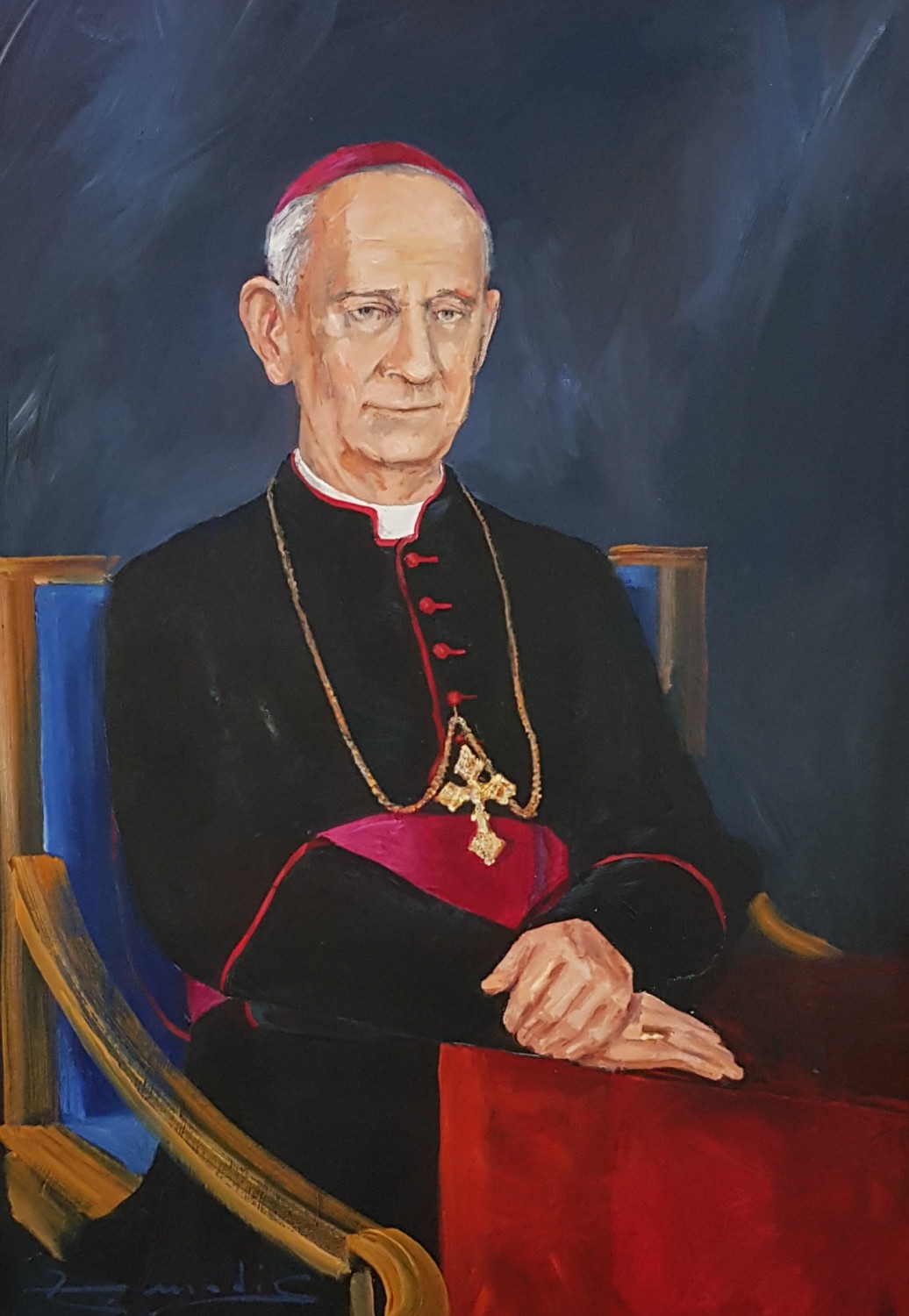
Throughout this year we have been following in thoughts the persona of Alojzij Šuštar, the Archbishop of Ljubljana at the time of Slovenia’s struggle for independence. Due to his fruitful contacts with people from abroad, he played a decisive role at the crucial moments of the formation of Slovenia’s statehood. On 26th July 1991, when the solemn celebration to mark Slovenia’s independence took place, the Archbishop celebrated the mass for the homeland and accentuated in his homily the following: “Let us unite the two aspects of our lives – on one hand we should trust in God, as though everything depended on Him alone, and on the other, we should work honestly, persistently and hard, as though everything depended on man alone. Let us be worthy of historic times as humans, Christians and Slovenes – in openness and benevolence towards every human being.”
Dear colleagues, it is my pleasure to congratulate you on the 30th Anniversary of Slovenia’s Independence. I wish you a joyful celebration and all the blessings in the times to come. “ /Anton Česen, M.A./
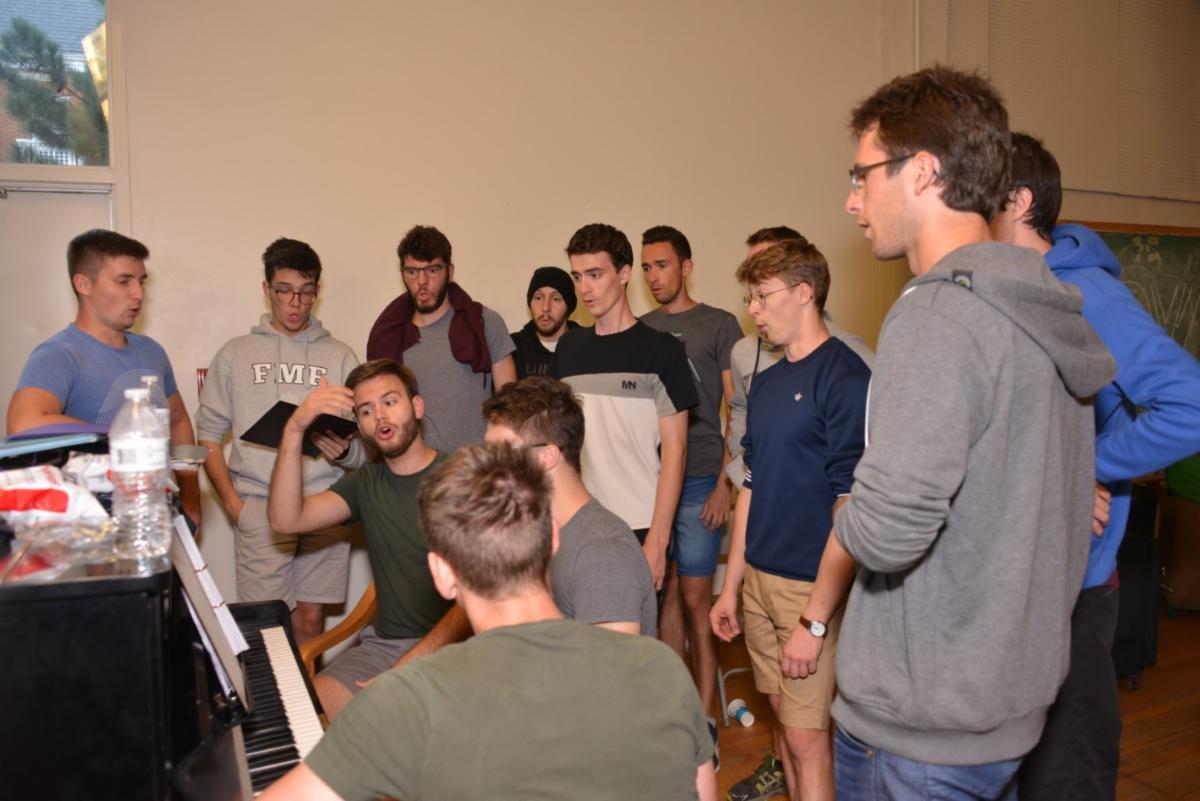
Singing Changes Just About Everything In Life – Megaron Chamber Choir
These are the meaningful words by Zvezdan Pirtošek, M.D., Ph. D., professor of neurology and cognitive neuroscience, that underpinned the versatile positive aspects of singing at the panel discussion to mark the Europa Cantat festival 2021. It will take place from 16th-25th July in Ljubljana, Slovenia. The round table entitled Choral music in psychophysical dimensions gathered experts from all walks of life, all dedicated to choral music and collective singing. They discussed the benefits of musicianship and focused on the challenges the pandemic has brought about in this field.
Benefits of collective singing Undoubtedly singing in Slovenia is a valuable asset. The astonishing numbers support this fact: 10 million hours per year of music-related voluntary work, 80.000 active singers, 2.500 singing ensembles and 1.300 conductors. All in the country with 2 million inhabitants. To start with, Sonja Greiner, Secretary General of the European Choral Association, pointed out at the well-known benefits of collective singing from physical aspects (general wellbeing), psychological features (relaxation and invigoration) to positivity brought about by the sense of community and bonding. Some other speakers at the round table discussed the astonishing fact that singing in fact regulates each singer’s emotion in relation with those of other singers, which leads to each other’s adaptation and ultimately to a more harmonious society as a whole.
What happens in human brain when we sing? Zvezdan Pirtošek was specific about the positive processes related to singing in different stages of human life from children, who respond favourably to harmonious sounds, to people with Dementia, Parkinson’s or mental health issues, who are enlivened by music. While singing, during exhalation, the vagus nerve is activated and this brings about peace of mind, state of relaxation and the sense of belonging and trusting people I feel close to. It is all about raising musical-linguistic awareness. The left hemisphere is open to semantics, analytical thinking and comprehension, the right hemisphere deepens the wonderful feeling that cannot be expressed through words, but it is so strong that as humans we will not be able to survive without songs or music.
Singing online vs. singing in a choir in person It goes without saying that when it comes to music, technology can actually bring people closer together than ever before. The sensation of feelings in the virtual or real world is activated by the same part of brain; however, there is a fundamental difference between the two. The activation of brain is much less intensive and much more limited in scope when singing online. »No digital medium cannot possibly be compared to a real life experience, especially not for children«, accentuated professor Pirtošek.
“So, I say thank you for the music” The experts wrapped up the discussion with the fact that singing boosts joie de vivre, which improves positive self-image, regulates anxieties of all types and encourages singers to overcome the individual, “soloist” needs for the benefit of a harmonious sound of the entire society. What more could we wish? “So I say thank you for the music, the songs I’m singing, thanks for all the joy they’re bringing.” At St. Stanislav’s we feel immensely proud that singing is such an important part of young people’s education. /Lily Schweiger Kotar/
We are proud to announce that two choirs from St. Stanislav’s Institution namely St. Stanislav Girls’ Choir and Megaron Chamber Choir, will actively participate in the event. The music festival is to take place in Ljubljana, the capital city of Slovenia, from 18-25 July 2021 .
The Europa Cantat Festival is one of largest international music festivals worldwide. Singers, composers, conductors, instrumentalists and choral publishers from all over the world participate at Europa Cantat festivals, but unfortunately this year this is not the case due to the ongoing coronavirus pandemic. The programme will be adapted and only partly realised.
American Computer Science League (ACSL) has been organizing computer science and programming international contests for 43 years. On average about 500 teams in the United States, Canada, Europe, and Asia participate annually. Students are tested on fundamental concepts in computer science, ranging from Number Systems to Boolean Algebra and Digital Electronics. Each contest also includes a problem to be solved by programming. The top students are invited to compete in an online Finals competition. This year three of the DCG students, namely Peter Lekše, Rebeka Stres and Angelika Volarič, qualified in the finals, but it was Peter Lekše, who gained the bronze medal. Helena Starc Grlj, teacher of informatics at the Diocesan Classical Gymnasium, prepared the students for the competition.
This how Peter experienced the event: “Recently I took part in ACSL Finals, which I qualified for by competing in four contests throughout this school year. The contest for top teams was held in the USA, but due to pandemic, the competition was held online, with the same starting times for all the students. I must say I was lucky because for me that was at 4 pm, but it must have been tougher for West Coast and Korean students.
The competition started with ACSL director Marc Brown greeting us on the livestream. Then we had three hours to solve two problems. One was about building sentences with words from a given dictionary and a given sentence structure. For the other one we had to make a program that would determine whether the king is safe, in check, in checkmate, or in stalemate, given the state of the game. I finished a little early and was pleased with my solutions even though they could most likely be further optimized but that would require more time. After a short break we started with short problems and had one hour to solve twenty of them. They were a bit harder since it was a final competition but I was able to handle everything and was pretty confident about my solutions. After about two hours the results were released. Out of 580 students who qualified for the finals I was tied in 44th place with 37 out of 40 points, winning a bronze medal. I am very happy with my achievement considering I did not practice very much and that I can be quite sloppy at times”. /Lily Schweiger Kotar/
Easter, 2021 Marija Blaži, Teacher at Alojzij Šuštar Primary School
“The right hand of the LORD has struck with power; the right hand of the LORD is exalted. I shall not die, but live, and declare the works of the LORD.” The stone which the builders rejected has become the cornerstone. By the LORD has this been done; it is wonderful in our eyes. Ps 118:16-17, 22-23
May the celebration of Easter open our eyes to the light of the Risen, so that our lives may reflect the hope that he bestows upon us! Felix Alleluia!
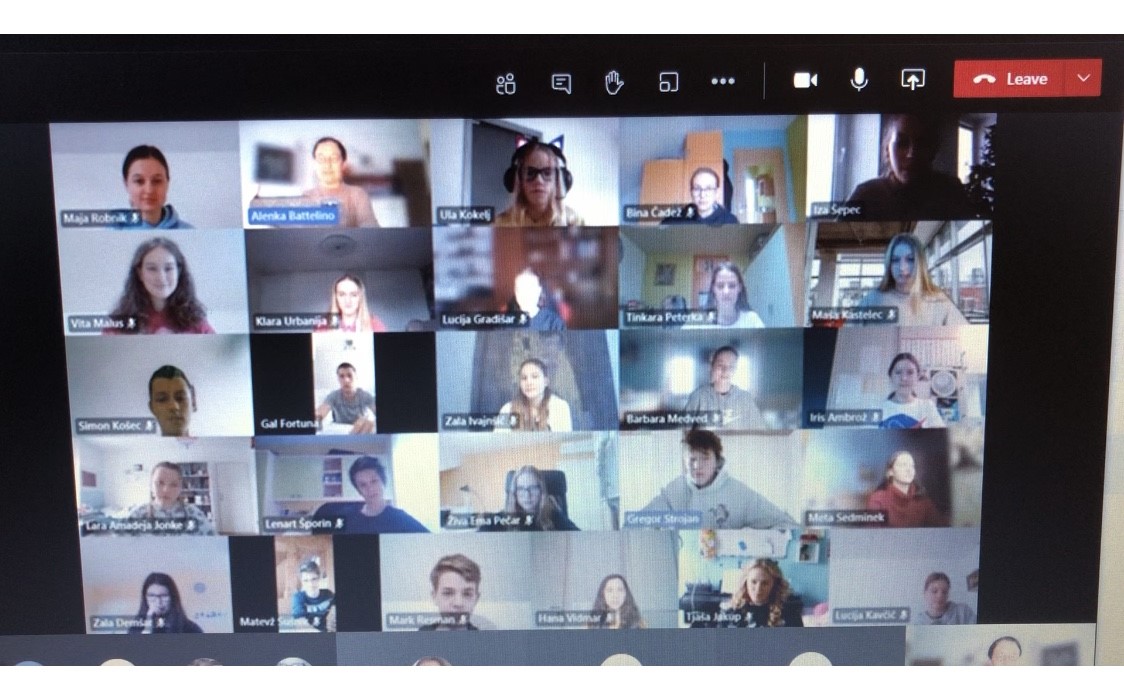
In these days this is the only way to say hello to our friends from Scotland.
The Story Behind: The S6 have decided to do a virtual walking challenge during the month of January to continue our fundraising for the British Heart Foundation! Together, we will complete 3500km by the end of January, which is the distance from Wellington School to our partner schools in France, Slovenia, Germany and Belgium! We will be tracking our steps to calculate the distance we complete and if you would like to support us, donations are greatly appreciated. Although it may be even more difficult now to fundraise during this time, we are determined to do everything we can to make a difference!
Latest Update: The S6 pupils have now completed 2,255km (over 3 million steps) and have just left the second partner school, St. Stanislav’s Institution in Slovenia and are currently walking through the picturesque village of Althofen in the Austrian Alps on their way to Dortmund, Germany! Our friends in Slovenia gave us a lovely warm welcome! /Susan Coontz/
We are happy to announce that a new Erasmus+ project Future€nvironment has been launched with the Mallinckrodt-Gymnasium (Dortmund, Germany) as the coordinator and the following partner instiutions: Sint-Jozefscollege, Torhout, Belgium, Institut Saint Dominique, Mortefontaine, France, SUGS Georgi Dimitrov, Skopje, Northern Macedonia, Wellington School, Ayr, Scotland and St. Stanislav’s Institution. Project coordinator at St. Stanislav’s is Alenka Battelino. The project starts on 15.12. 2020 and ends on 14.12. 2022.
The short description and the aim of the project run as follows:
The environment, sustainability, global warming, biodiversity – these are topics which engage young people across the world; yet while many are ‘talking the talk’, they are not all ‘walking the walk’. This project aims to capture the interest of our students in the natural world and the environment and help them to make changes that will ensure the sustainable future that they are campaigning for. Although young people are worried about the future of our planet, many are not making the small changes in their lives that would help to safeguard the planet. Food waste, conspicuous consumption and reluctant recyclers are present in our schools in Belgium, France, Germany, Northern Macedonia, Slovenia and Scotland (UK). This project will encourage the small steps which can be taken by everyone for the good of all. /Alenka Battelino/
Each year the entire school community of St. Stanislav’s Institution celebrates St. Stanislaus’ Day to mark the feast of the Institution’s patron. It took place on 13th November 2020, in particular to celebrate the many talents and successes of the pupils of Alojzij Šuštar Primary School and the students of Diocesan Classical Gymnasium. The headmasters addressed the students and offered a flashback of the academic year that was so abruptly brought to an end by the pandemic. This year’s festivities were held under the title of Fulfilling God’s Will, which was the motto of Alojzij Šuštar (1920-2007), the Archbishop of Ljubljana between 1980-97. The centenary of his birth is being celebrated this academic year. Unlike previous years, all celebrations have been restricted to virtual mediums and consequently, for the first time in the history of the re-establishment of St. Stanislav’s Institution the event has been prepared digitally by Studio Siposh and followed online. This year’s programme was in hands of Mojca Lavrič of The Diocesan Classical Gymnasium and turned out to be a happy feast of mind and soul.
Considering new doorways
Holy mass was celebrated in the school chapel by the Archbishop of Ljubljana Msgr. Stanislav Zore and school chaplains. He spoke of the obstacles in our lives, which should never prevent us from going on, offering a remarkable example of the life of Institution’s patron saint St. Stanislaus Kostka. He never let the obstacles stop him on his way to reach his goals and the Archbishop encouraged the students to seek for new routes, new possibilities and new doorways.
“The magic of music lies in pauses … We all need them desperately.”
With these words Karel Gržan, Ph.D. reflected upon the challenges of today’s world, considering above all the outstanding message of Šuštar’s life and work. The director of St. Stanislav’s Institution Anton Česen, M.A. pointed out at Šuštar’s decisive role in legislatively re-establishing St. Stanislav’s Institution for education. He also expressed gratitude to the keen supporters of the Institution. The performance was given by the students of all schools, fusing teachers and students, actors, singers, dancers and instrumentalists into a meaningful entity.
“Archbishop Šuštar was a very kind and prudent person.”
The entire school community was greeted also by the President of the Republic of Slovenia BorutPahor. He congratulated the Institution on the school’s day and shared some happy memories of Archbishop Šuštar with the audience. He said he felt eternally thankful for what he had done for the Slovenes and Slovenia and urged the young to follow Šuštar’s inspiration.
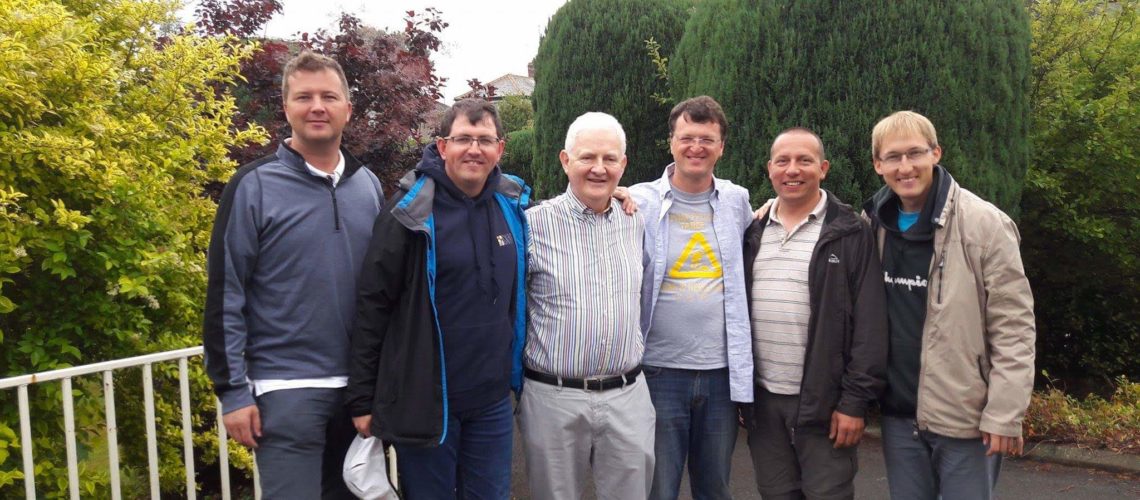
Mgr Jim Cassin with the priests from St. Stanislav’s Institution in Ireland (2017)
It is with great sadness that we announce the death of The Rt Rev Mgr Jim Cassin from Killkeny, Ireland, who died peacefully on Friday, 5 June 2020. He was a faithful friend of St. Stanislav’s Institution and collaborated successfully for decades with the last three directors of the Institution – Bishop Jamnik, Roman Globokar and Anton Česen. Mgr Cassin devoted his life to Catholic education and the well-being of everybody connected to Catholic schools, which is the point where he influenced decidedly certain aspects of work and life in St. Stanislav’s Institution. He had always considered schools as places of faith and learning. He was a very valuable, learned and knowledgeable advisor, in particular as a member of the Association of Management of Catholic Secondary Schools in Europe, the European Committee for Catholic Education (CEEC) and The Irish Catholic Bishops’ Conference. He participated actively as a speaker in many conferences and symposiums organized by St. Stanislav’ Institution, the last one being in 2009 when the religious education in Slovene schools was evaluated and offered some future perspectives. Jim delivered a speech on the teaching of religion being a source for Europe.
For me, he was the most powerful figure, when in the classroom with students. I had the honour of having him occasionally in my classes, when he visited Slovenia and the Institution on several occasions. He had the gift to encourage and connect the young, was a powerful witness of Christ’s gospel and a committed priest. This is why the students so gladly listened to him. But above all I remember him with great fondness as someone who was gentle, considerate, kind and funny. Jim was such a warm person and had a kind word for everyone.
Jim Cassin will be sorely missed. In his last message with New Year’s greetings he wrote: “I am hoping to spend a good New Year 2020 and hope to see you in Ljubjana again soon.” Little did we know he would spend “a good New Year 2020” in Father’s kingdom. May he rest in peace. /Lily Schweiger Kotar/